
Carved Corkscrews
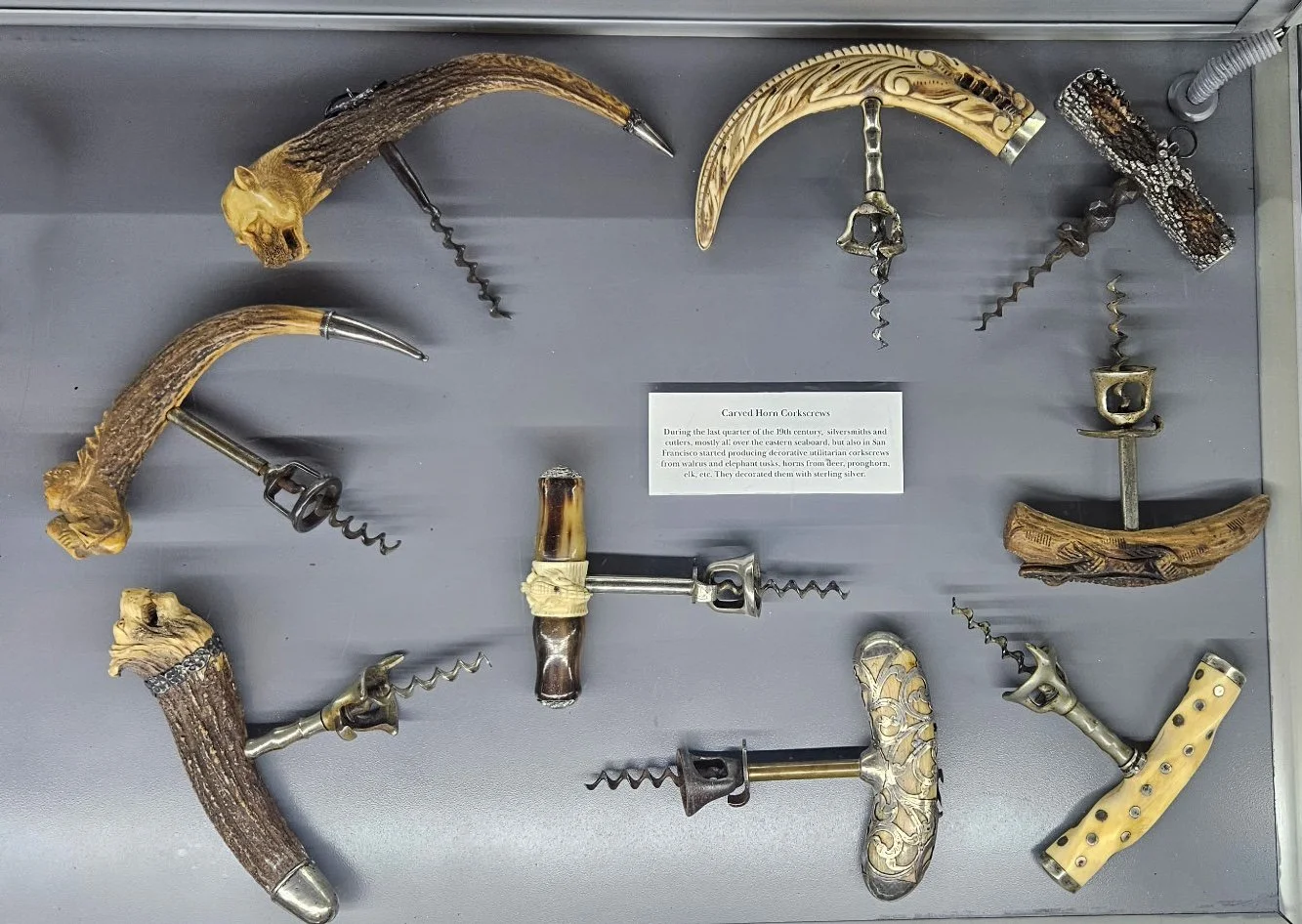
During the late 19th and early 20th centuries (the Victorian and Edwardian eras), corkscrews evolved from purely functional kitchen tools into high-status luxury items. Among the most coveted were those crafted from natural materials—specifically carved horn and walrus tusks—accented with sterling silver.
These pieces were often part of a gentleman’s traveling kit or displayed in a formal dining room as a symbol of wealth and global reach.
The use of "exotic" organic materials was a hallmark of this era, driven by the expansion of trade and the Victorian fascination with the natural world.
Antler and Horn: Usually sourced from stag, bull, or water buffalo. The natural texture (the "bark" of the antler) provided a superior grip for the manual effort required to pull a cork.
Walrus Ivory (Tusk): More rare and expensive than horn, walrus tusks were prized for their density and smooth, creamy patina. Unlike elephant ivory, walrus tusks often show a unique "marbled" core when carved.
Sterling Silver: The "accents" typically included silver ferrules (the band connecting the handle to the screw), decorative end-caps, and sometimes ornate monogram plates where the owner's initials were engraved.
Chief American sterling silver producers that created high-end, organic-material-handled items like walrus tusk, stag horn, or boar tusk corkscrews in the late 19th and early 20th included Gorham Manufacturing Co.,Tiffany & Co., and Walker. These companies often applied ornate sterling caps or collars to the natural tusk handles, sometimes featuring carved animal heads
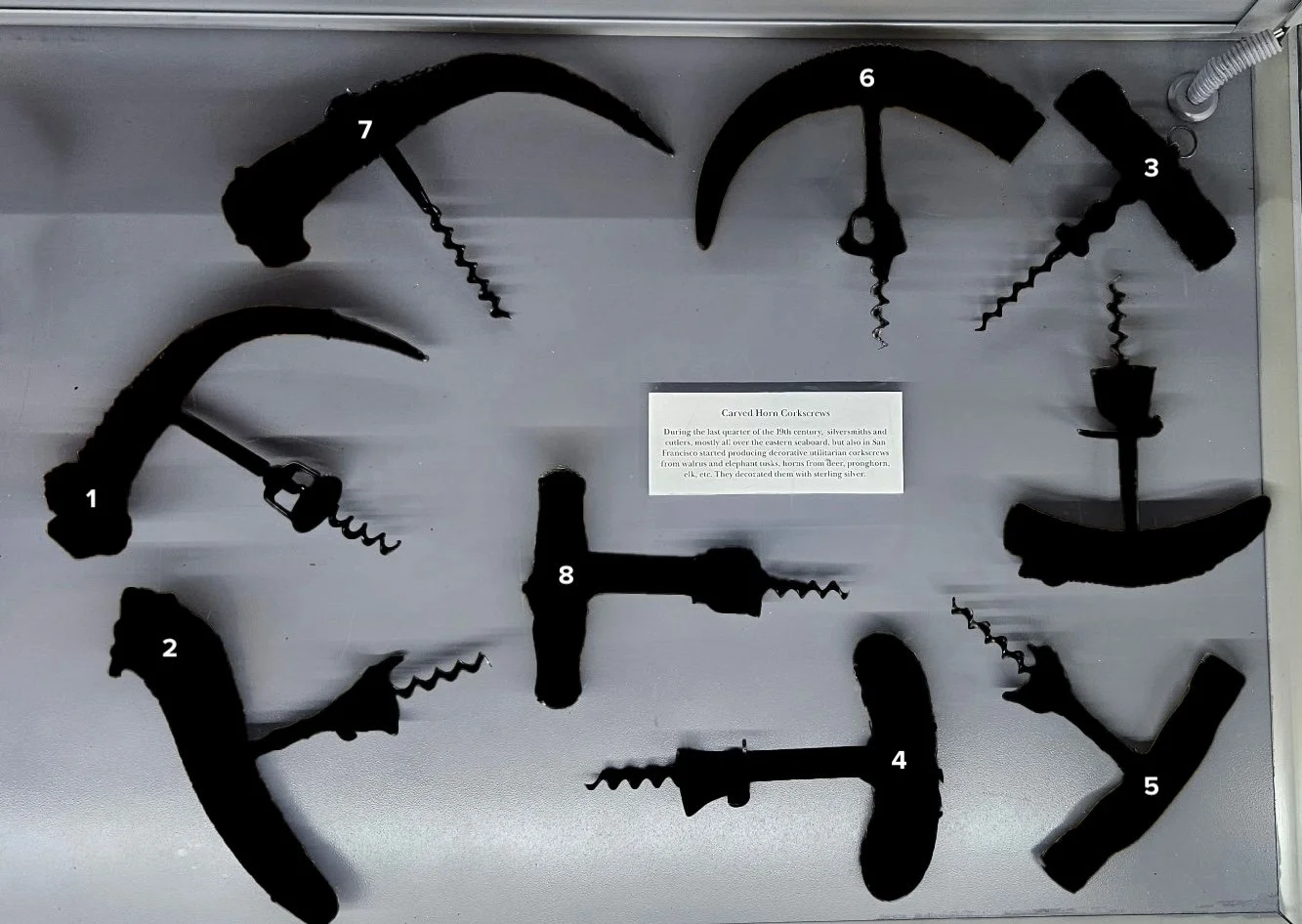
Carved Staghorn with Monk
Carved Staghorn Lion
Carved Staghorn Thiery and Crosselmire Silver Cutouts
Walrus Tusk with Sterling Overlay
Walrus Tusk with Sterling Dot Decoration
Ornately Carved Walrus Tusk
Carved Female Lion
Horn Handle with Figural Applique