Collections
Origin of the Corkscrew
The corkscrew evolved from a "steel worm" gun tool used to remove unspent charges from muskets, with the earliest mention around 1681; the first official patent for a corkscrew with an added disk (the "Henshall Button” to help turn the cork was granted to England's Reverend Samuel Henshall in 1795, making him the father of the modern design, though similar tools existed earlier. This simple, effective design became the foundation for countless variations, including waiter’s levers and winged corkscrews, which added levers for easier use. Corks were also made in decorative designs from all types of materials including precious metals starting in the later part of the 18th century.
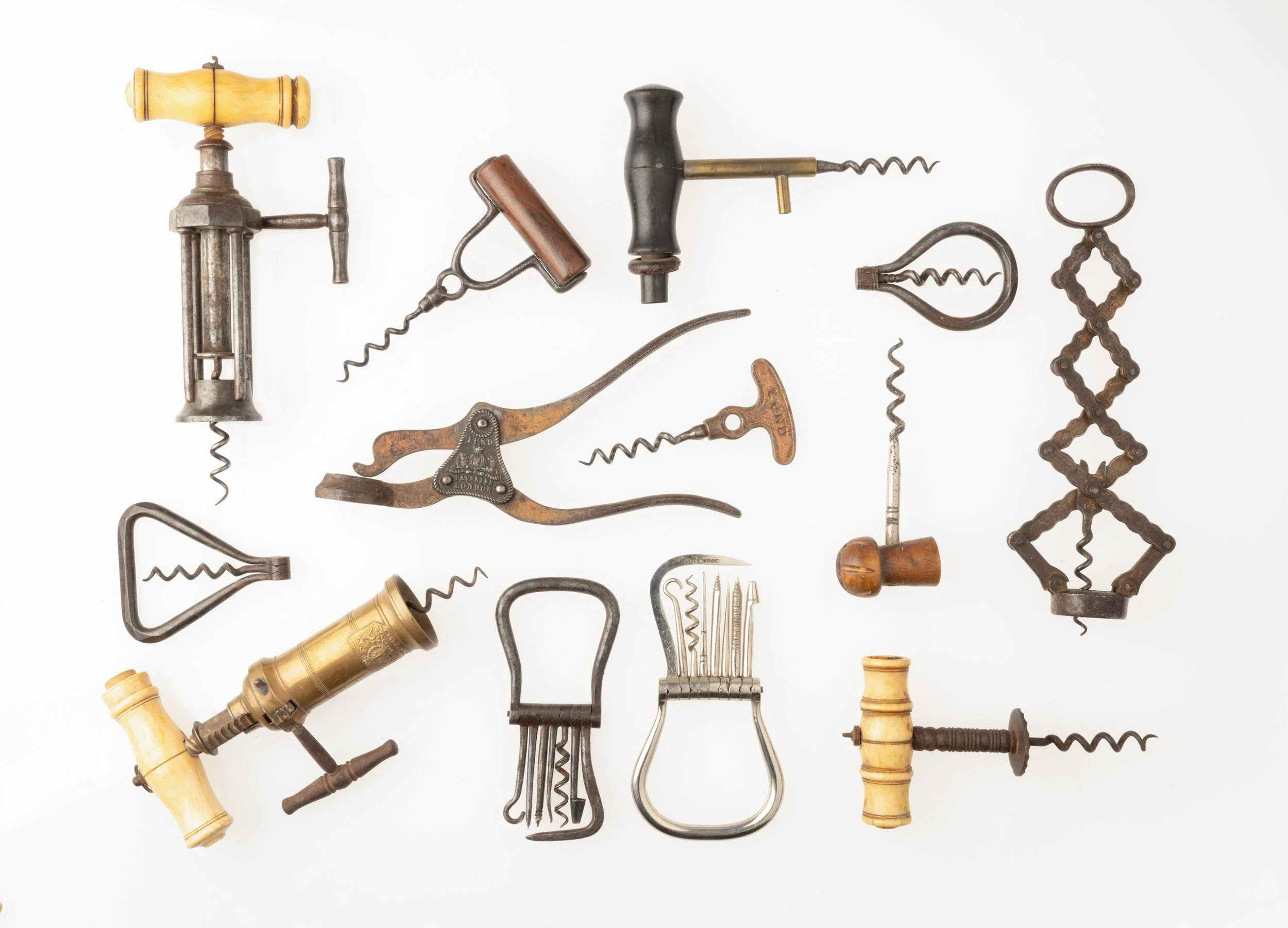
English Corkscrews
England was the first country to have corkscrew patents. The first was 1895. Many of these mechanical corkscrew patents from other countries were double patented in England as well.
The English cutlers of the late 18th and early 19th century produced a tremendous amount of pre-patent corkscrews, but were also the first to patent their designs.
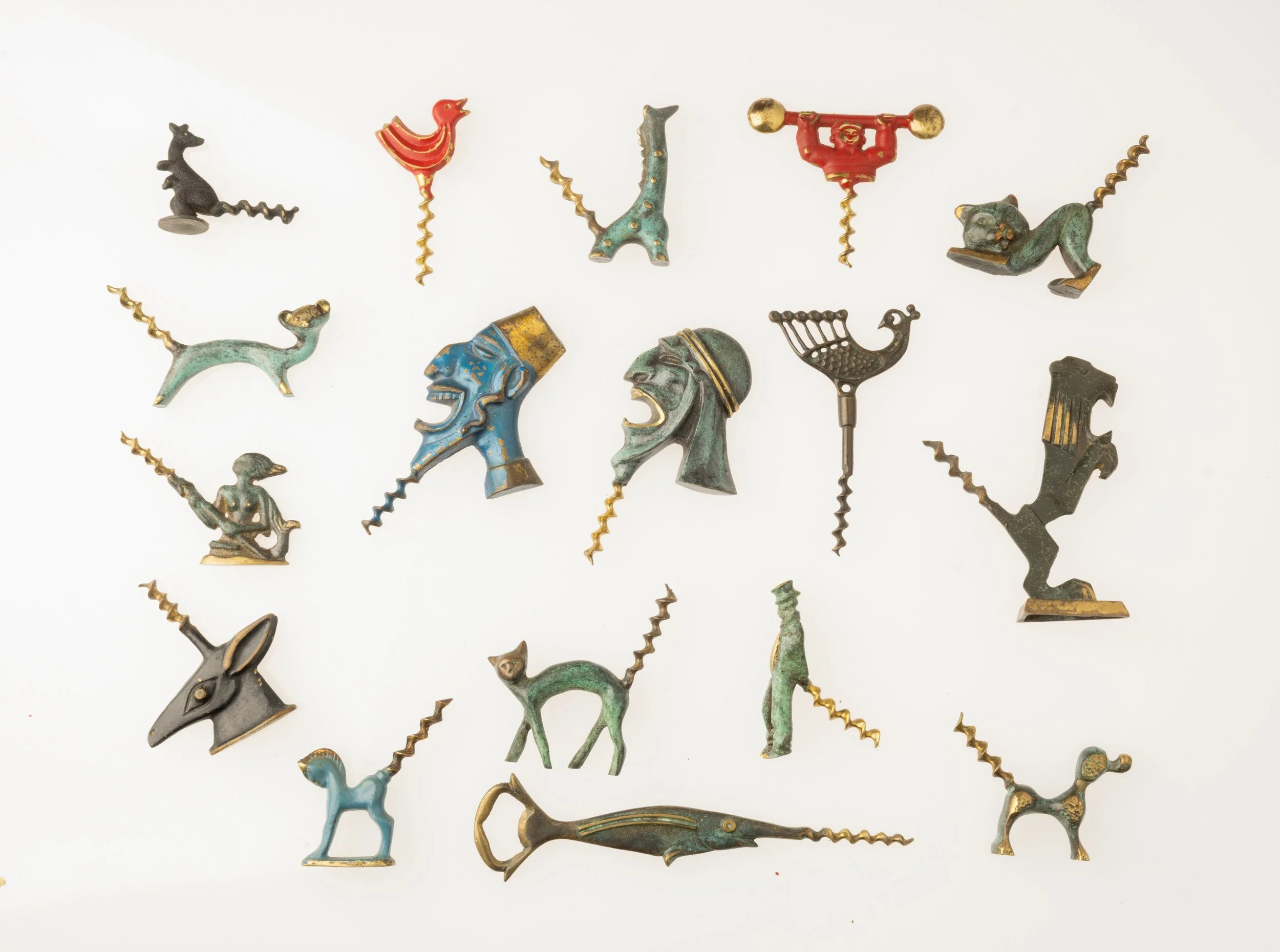
Israeli & Paris Art Australian Corkscrews
In the years between World War I and World War Il it became apparent that it was safer outside of Europe for Jews from both Eastern and Western Europe. With formation of Israel as a homeland for Jewish emigres, many Jewish European artists went there. The most unique aspect of these corkscrews is that the worms are brass, not steel. There was a shortage of steel during the war years.
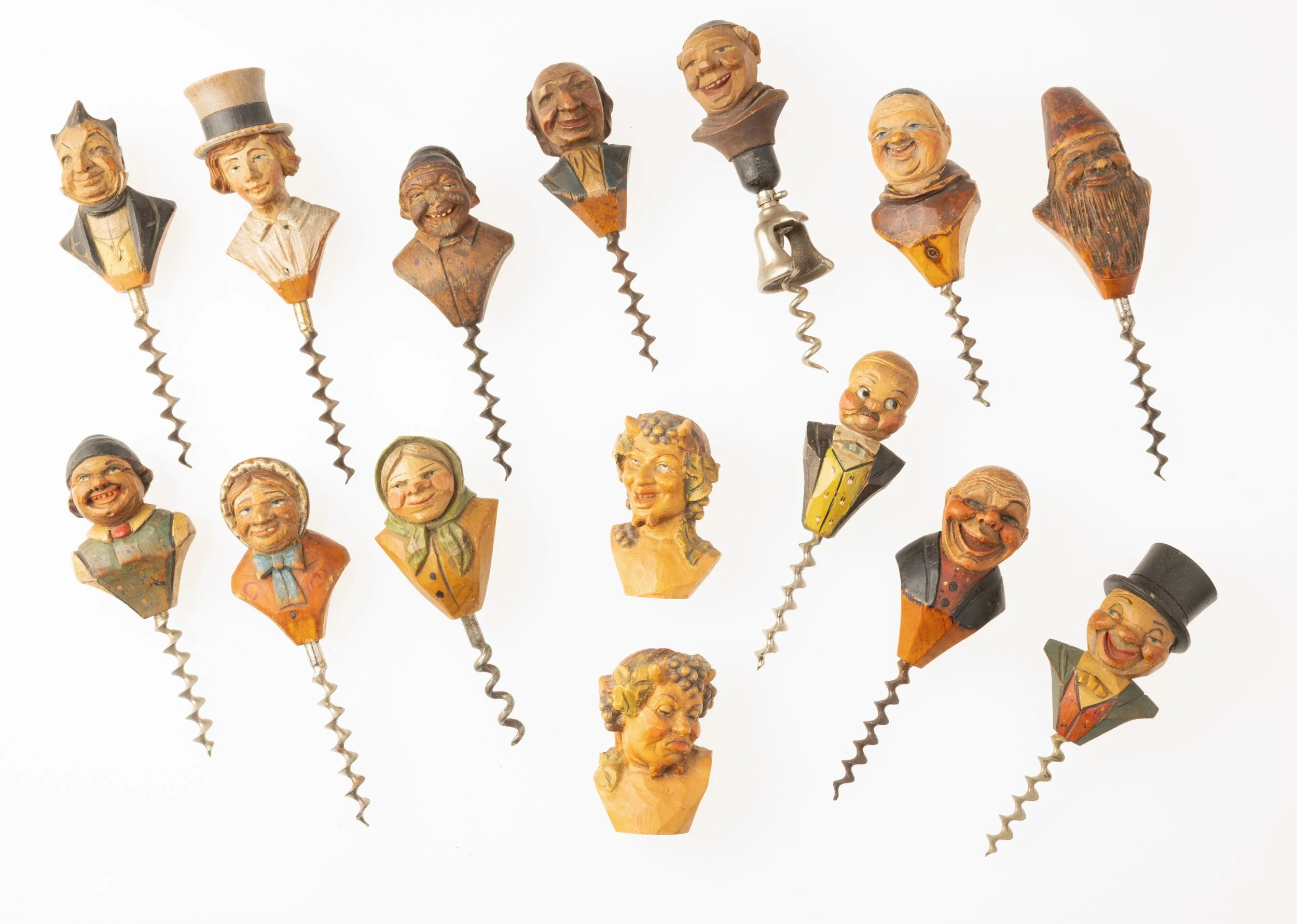
ANRI Corkscrews
The ANRI wood carving company was founded in 1912 in the Grooden Valley of Alto Adige in the Italian Alps by Josef Anton Riffeser. The name ANRI comes from the first two letters of his first name and last name. These corkscrews were carved by local villagers at Riffeser's direction.
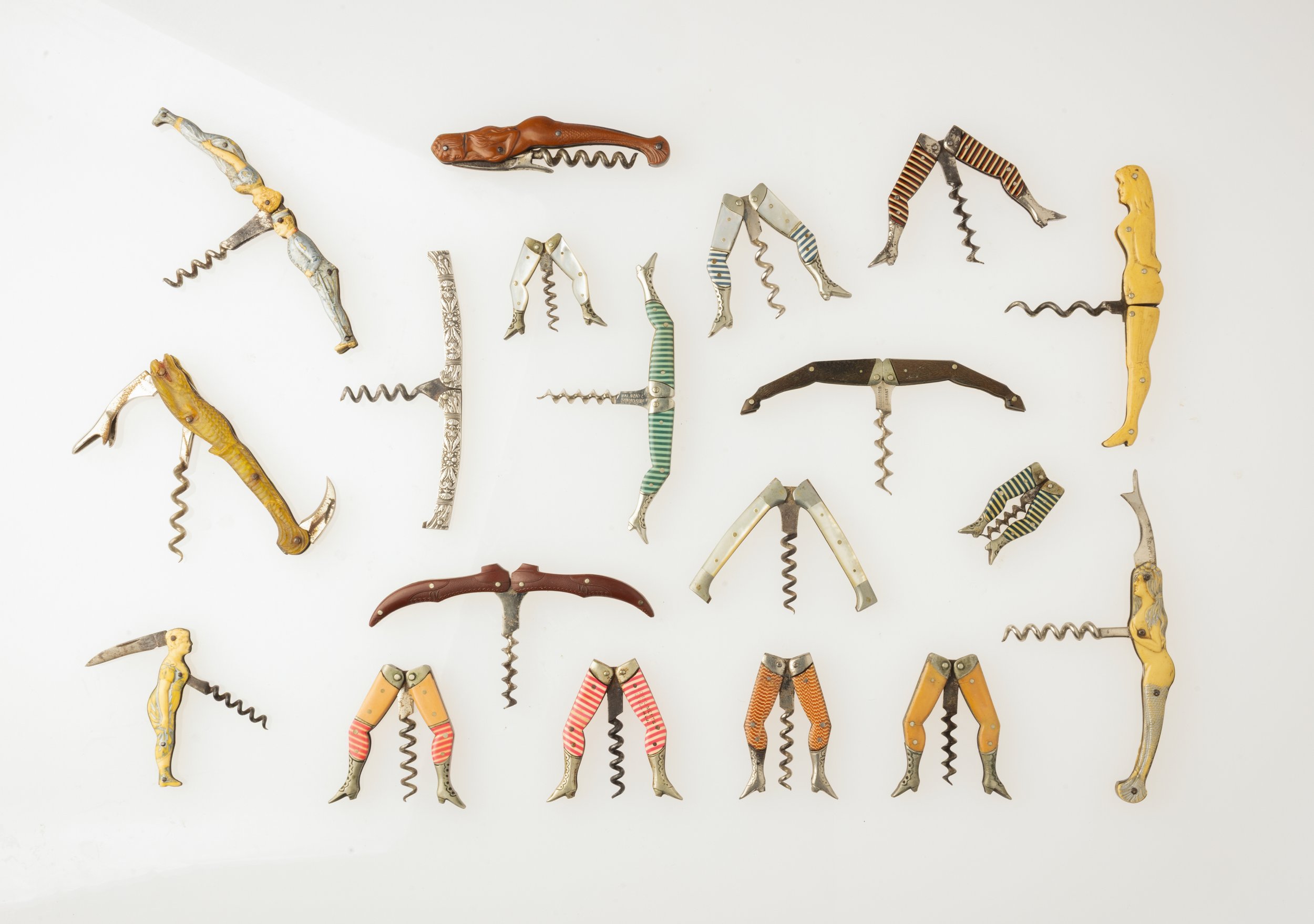
Legs & Other Figural German Corkscrews
During the latter part of the 19th century, German Cutlers started to produce figural corkscrews. Most were made out of metal with artistic celluloid designs. Celluloid, the first commercially successful synthetic plastic, was invented by John Wesley Hyatt in the late 1860s. The most common shape was the Can Can or Lady legs. Other materials & figures were also used.
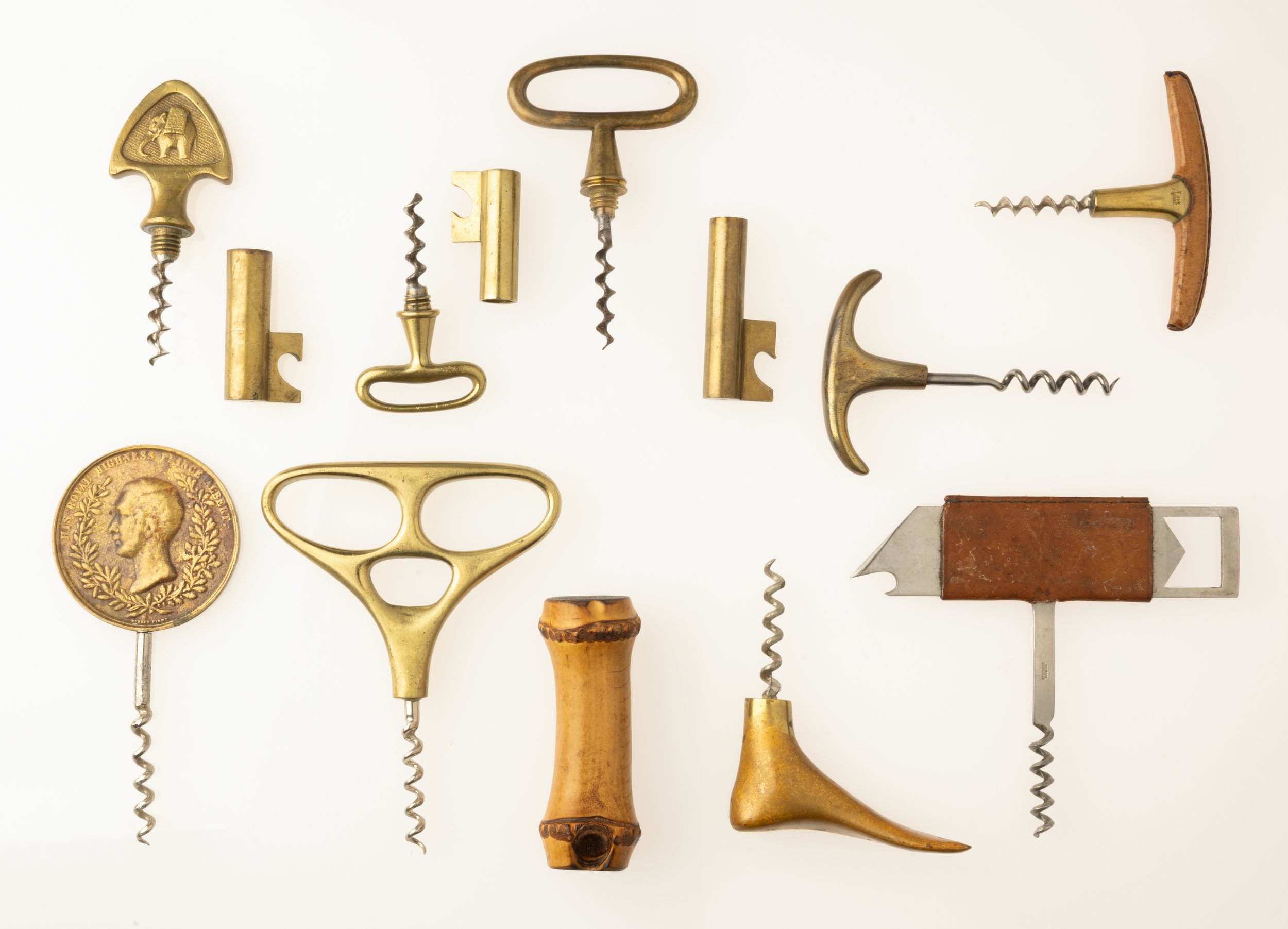
Carl Aubock Austrian Corkscrews
Carl Aubock was an Austrian designer in Vienna. Their pieces were more utilitarian than the other Austrian designers. There were no figural animal designs but instead, hands, feet, and keys. The workshop was part of the Wiener Werkstatte known for Modernist Design.
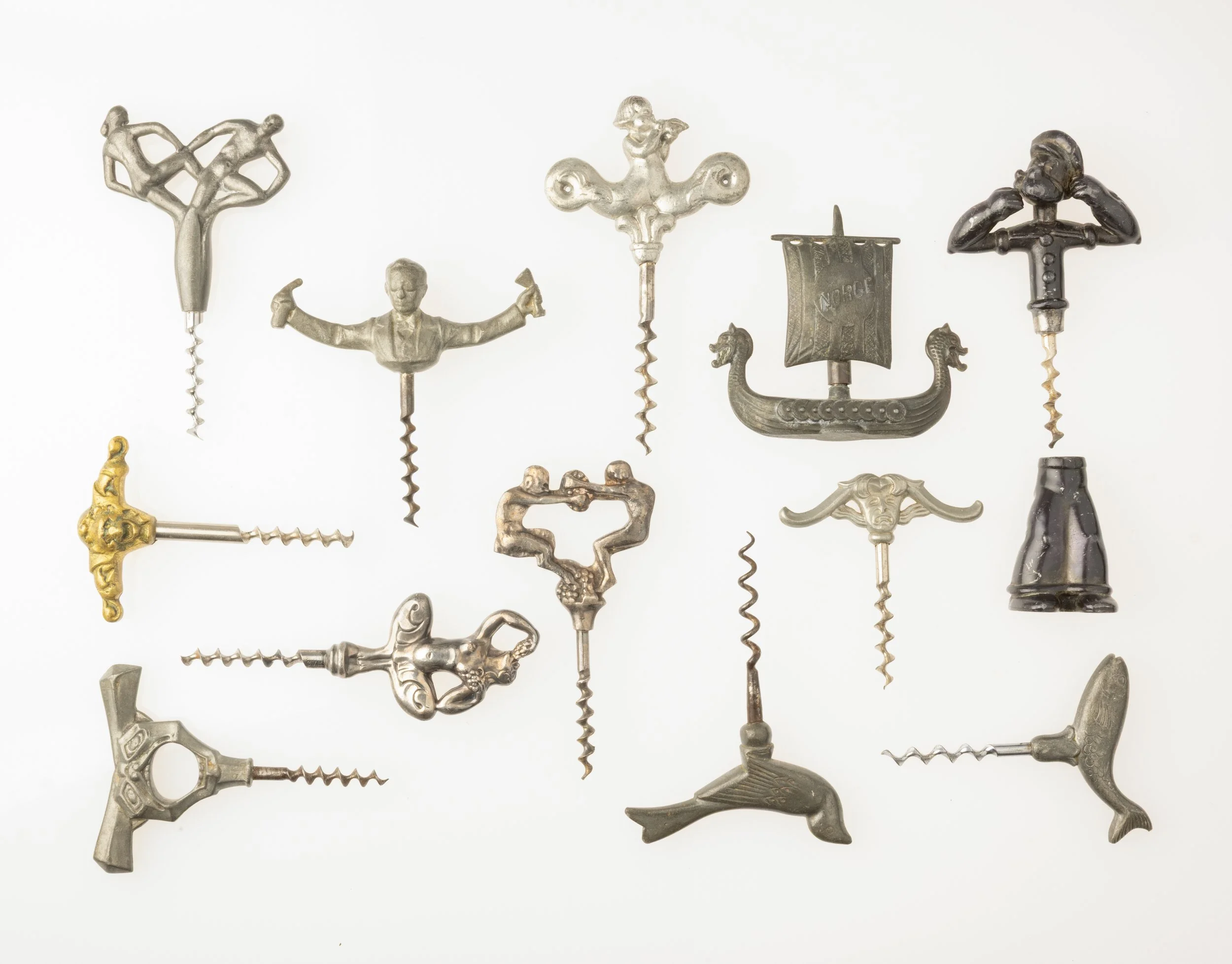
Scandinavian Corkscrews
The corkscrews of Norway, Sweden, and Denmark were mostly figural and mostly made of TENN (pewter). They also used silver for the higher end corkscrews. Some of these pieces are pieces of art. The majority of them were designed from the 1930s onward.
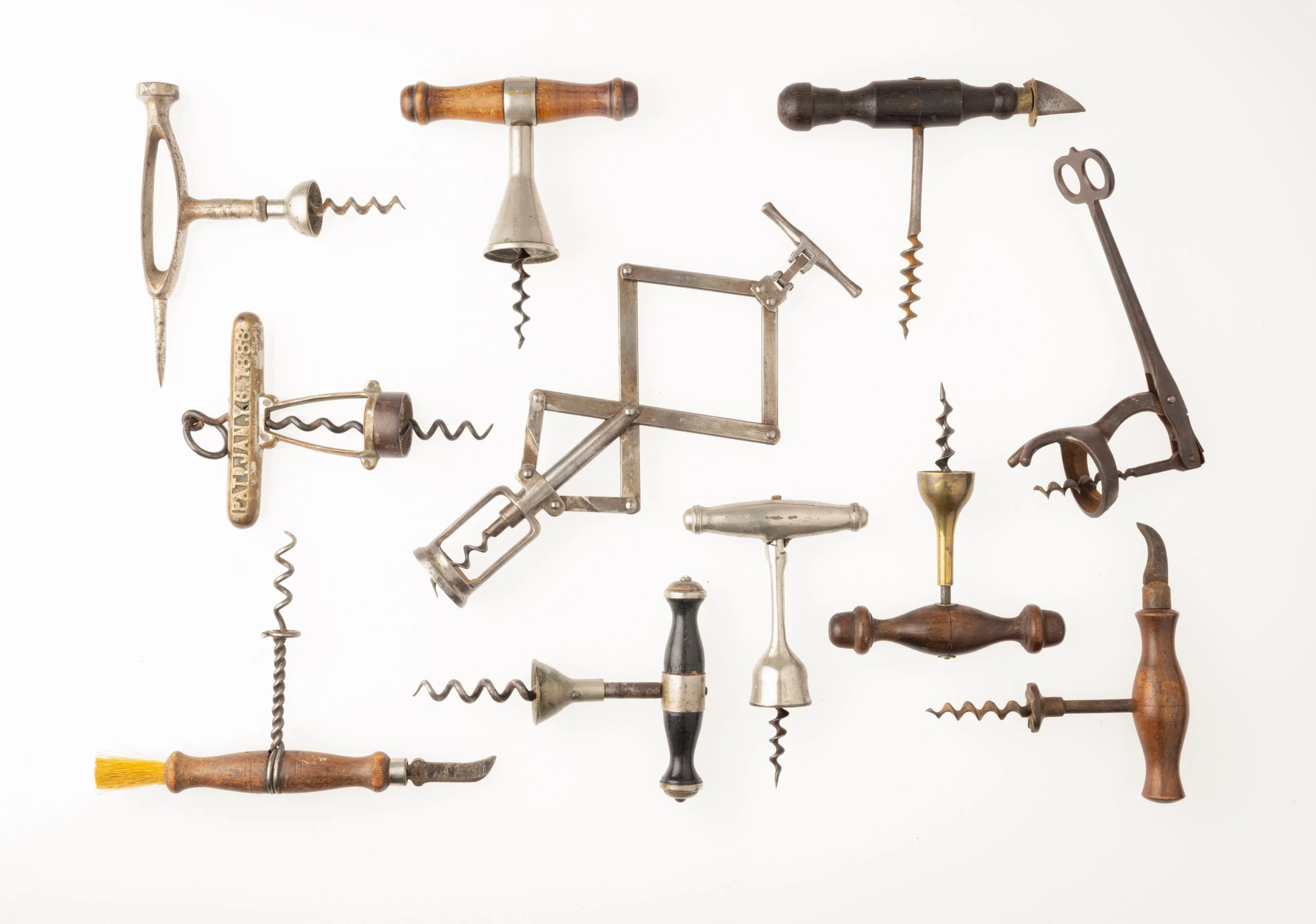
American Corkscrews
The corkscrews in the United States weren't patented until the beginning of the 1860s. Here we have a large selection of important American patents. The advent of the Industrial Revolution in the 1870s made many of these mechanical corkscrews possible.
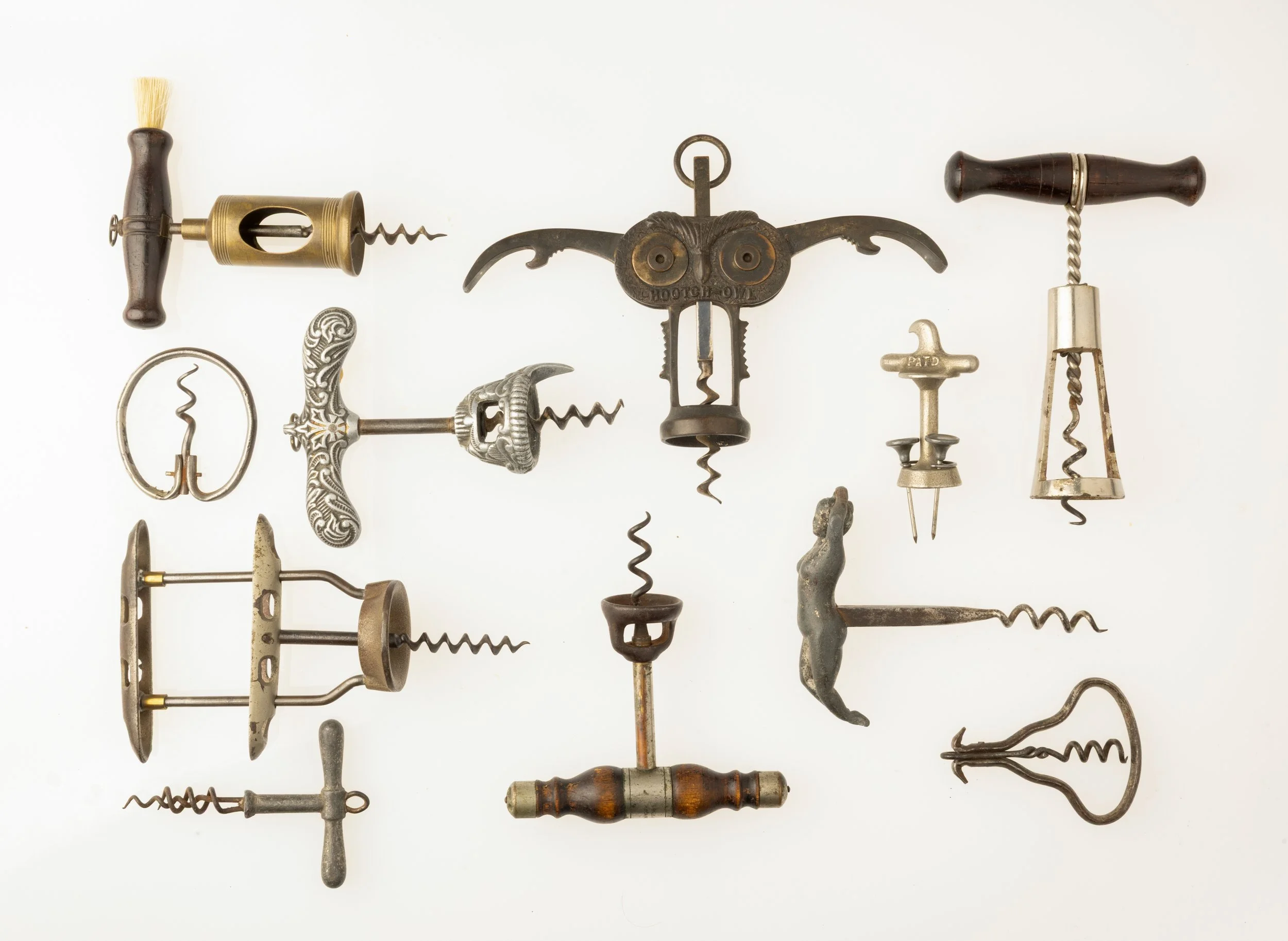
Precious Metal Corkscrews
In the late 19th and early 20th century, there were hundreds of small sterling silver and gold companies in both this country and Europe. In this mini collection, you will find the decorative and utilitarian corkscrews produced by them. Corkscrews were only a tiny part of what they produced. Jewelry, cutlery, bowls, vases, etc. Anything that was both beautiful and useful for the middle and upper classes.
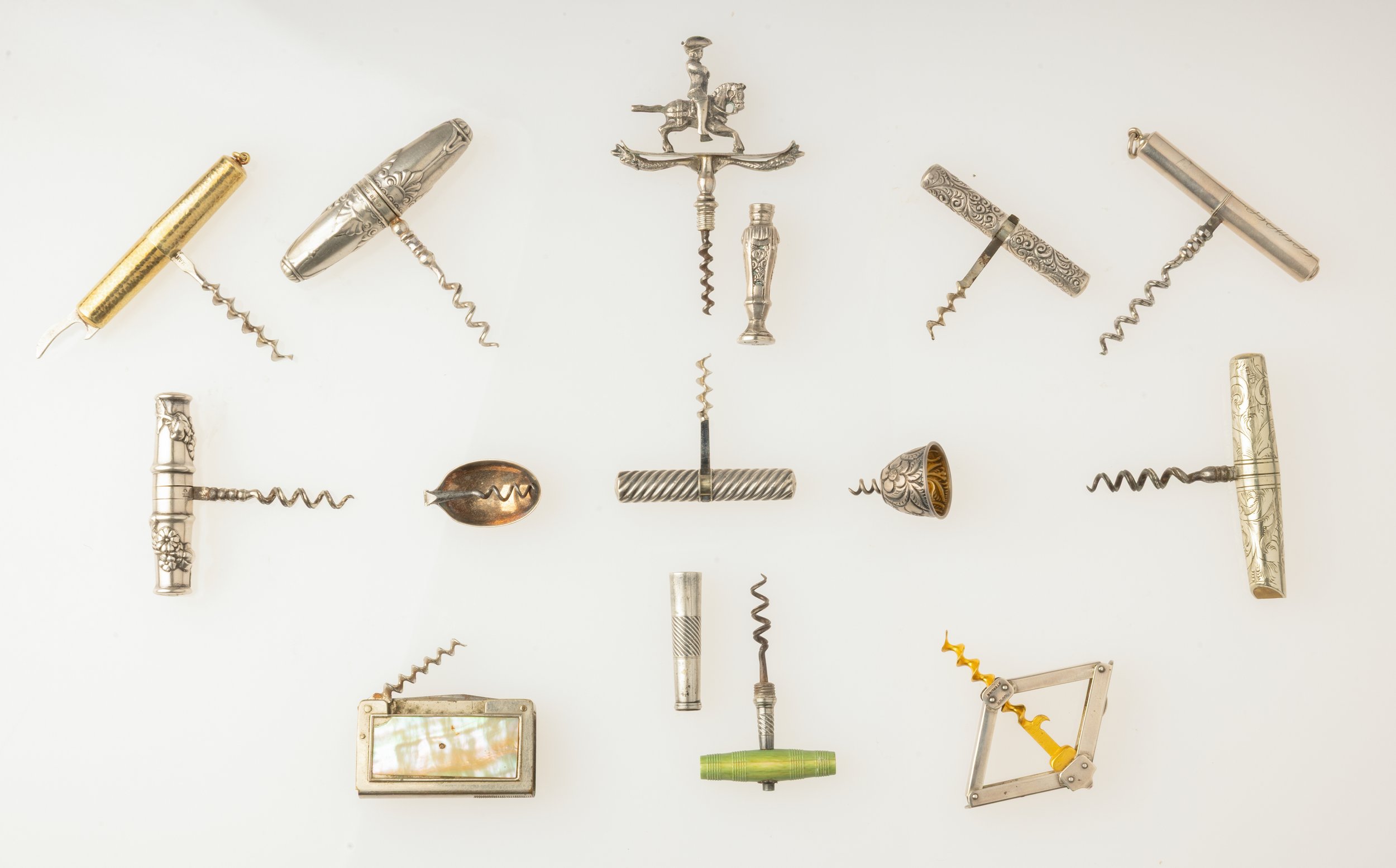
Pocket Corkscrews
The pocket corkscrew was an awesome convenience tool in the late 19th century. They were both utilitarian and decorative.
Here we have roundlets, peg and worms, multi-tools, and picnic corkscrews.
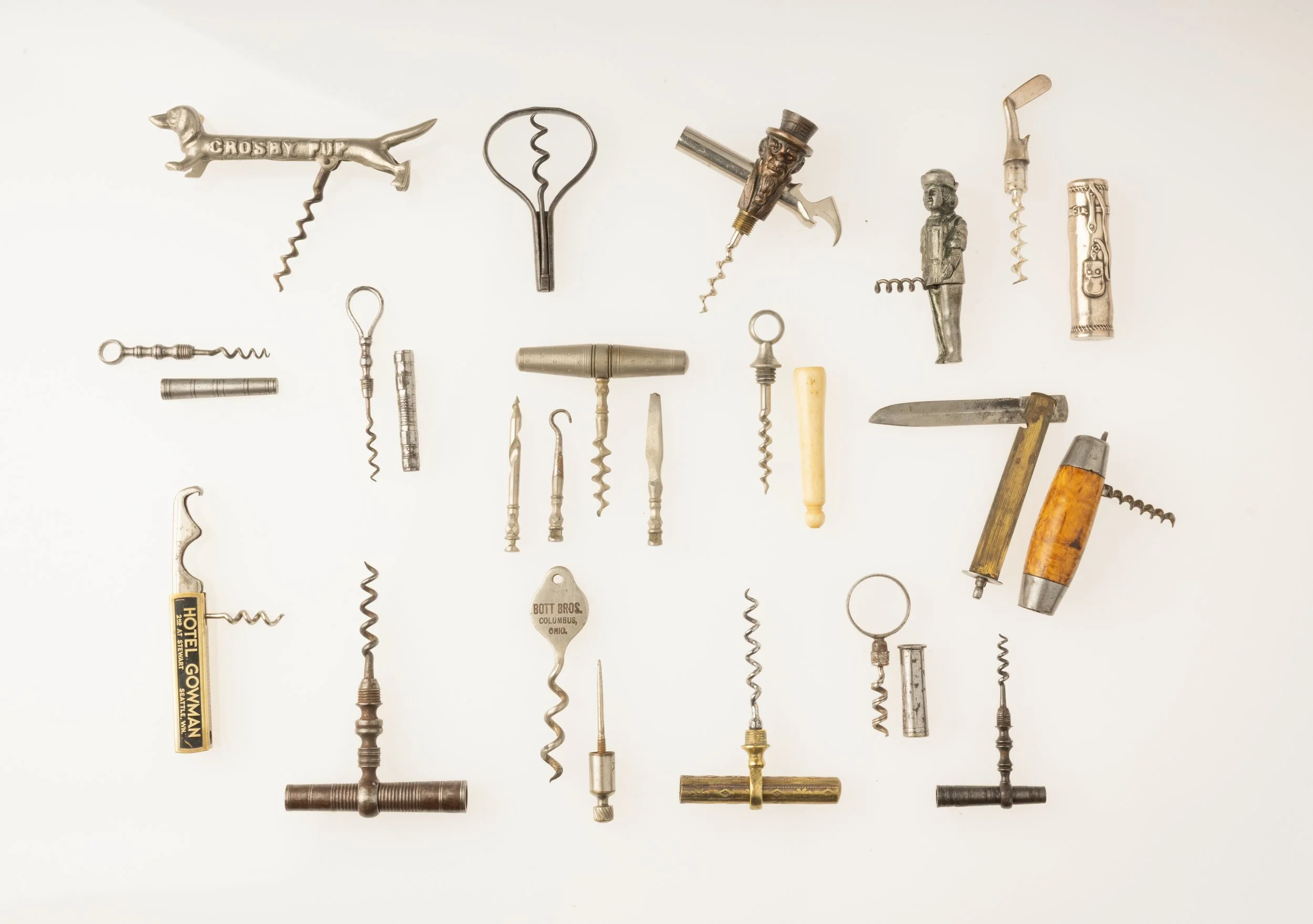
Celluloid Head Figurals
Celluloid, the first commercially successful synthetic plastic, was invented by John Wesley Hyatt in the late 1860s as a substitute for ivory. These corkscrews are mostly German & English and were created in the late 19th - early 20th century.
Incredibly creative and historical in their design.
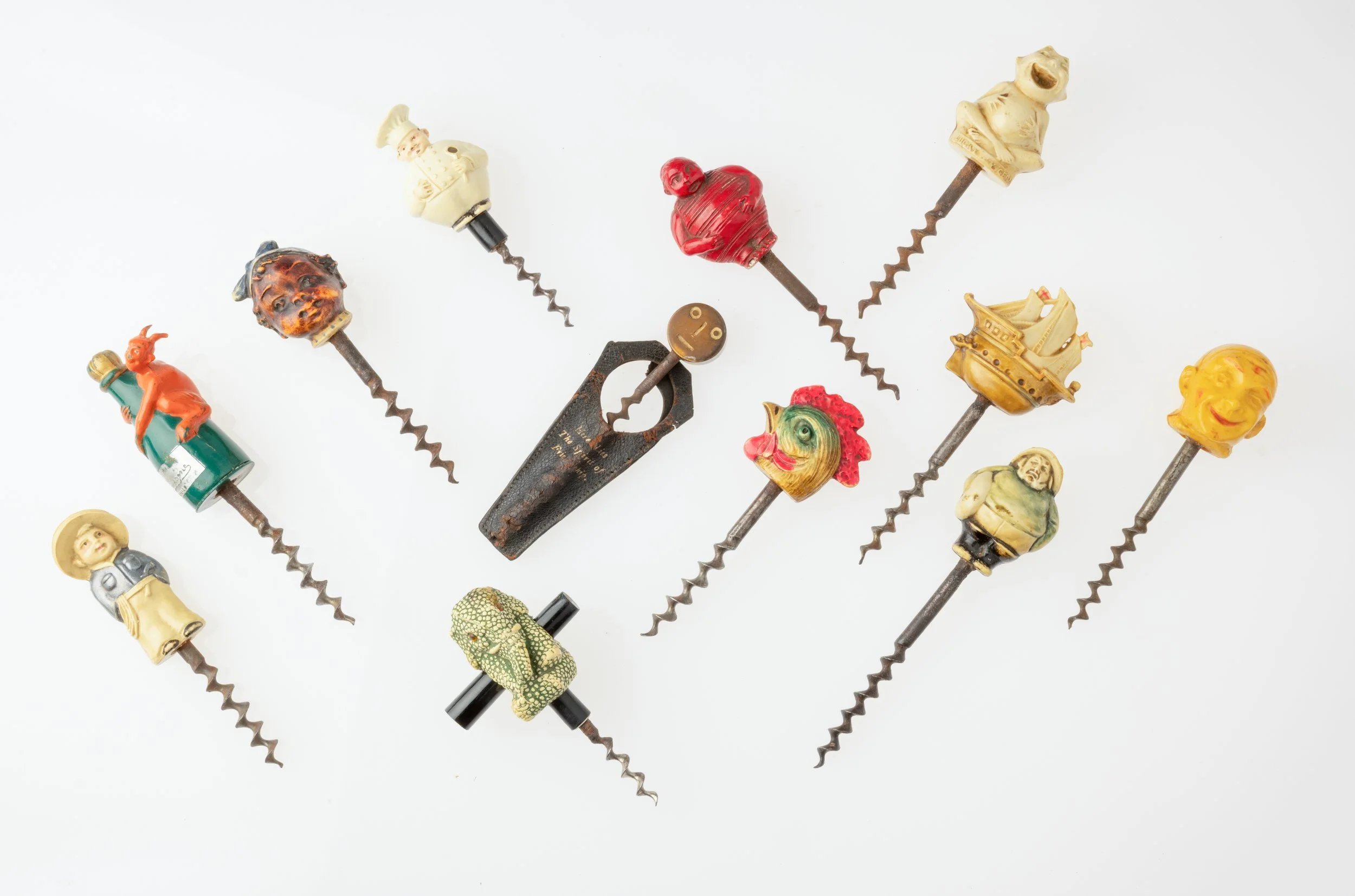
Italian Corkscrews
The Italian corkscrews are easily recognizable. They are generally mechanical, but made of brass or metal.
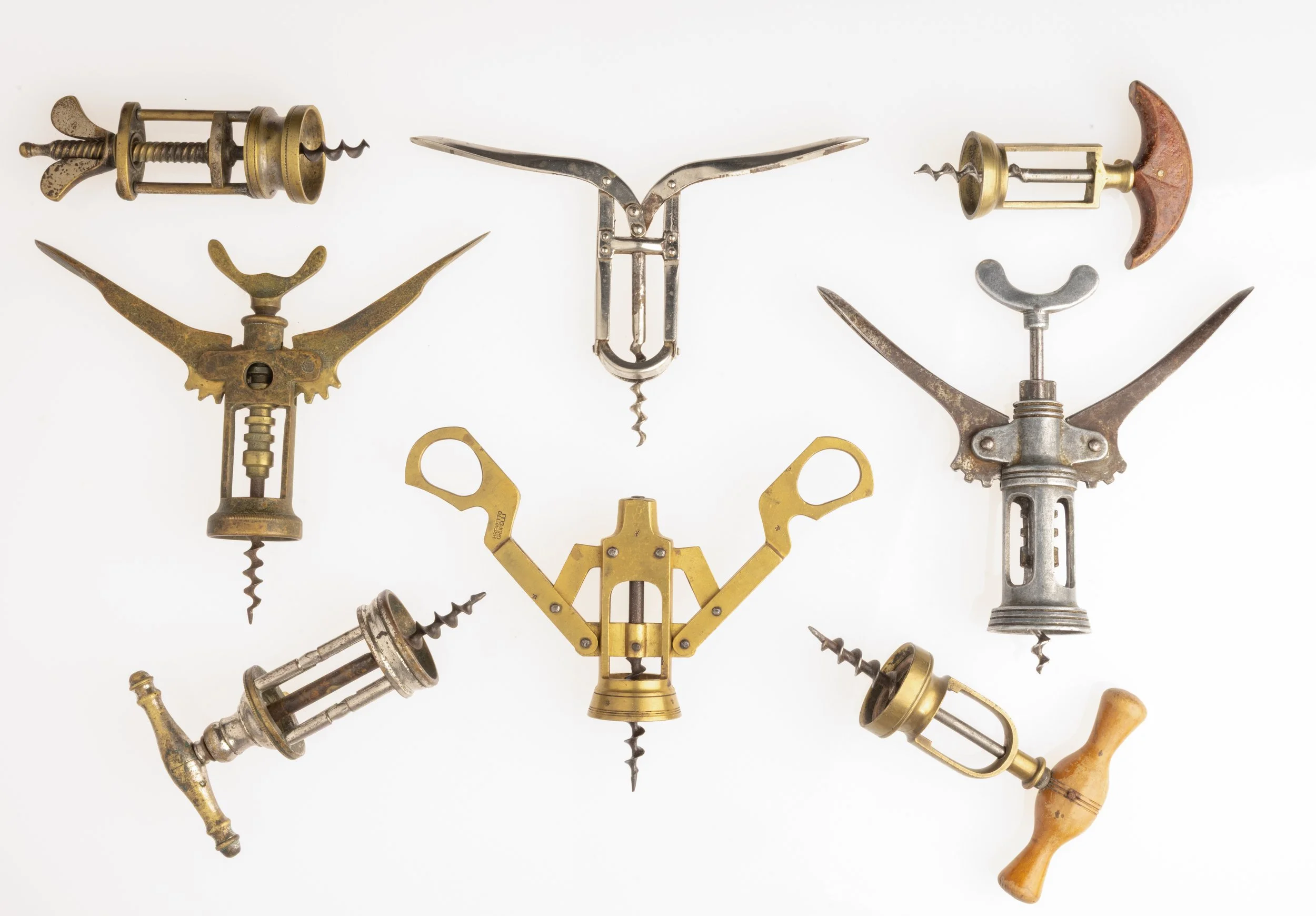
German Corkscrews
The Germans have always been very creative and industrious. Most of these German patents were created in the 1870s - 1920s. The Germans specialized in mechanical corkscrews.
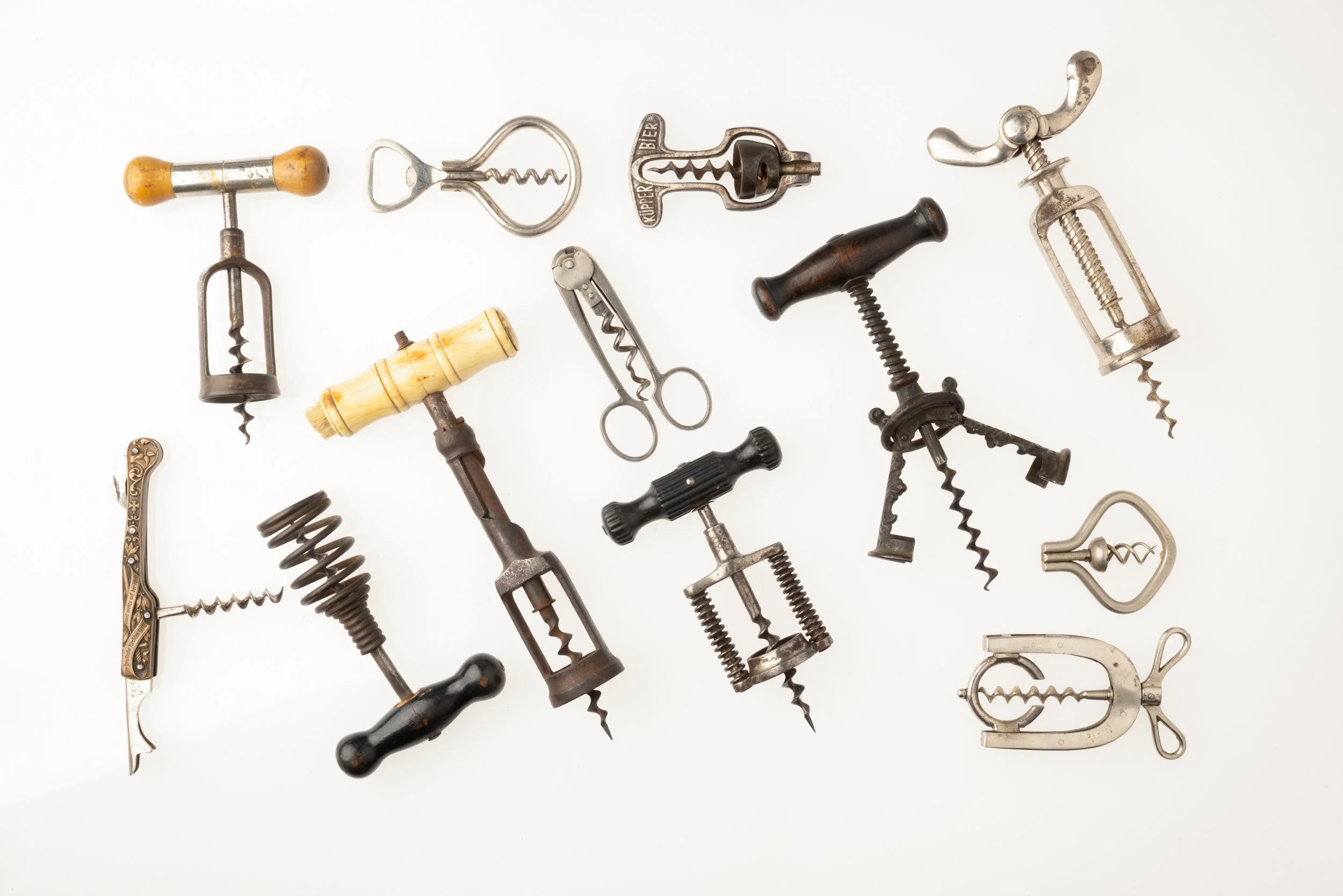
Miniature Corkscrews
In this mini collection, there are miniature corkscrews. Back in the late 19th and early 20th century every bottle had a cork.
There were no twist off caps. That meant everything needed a cork, even tiny bottles. Perfume, medicine, elixirs, poison, etc.
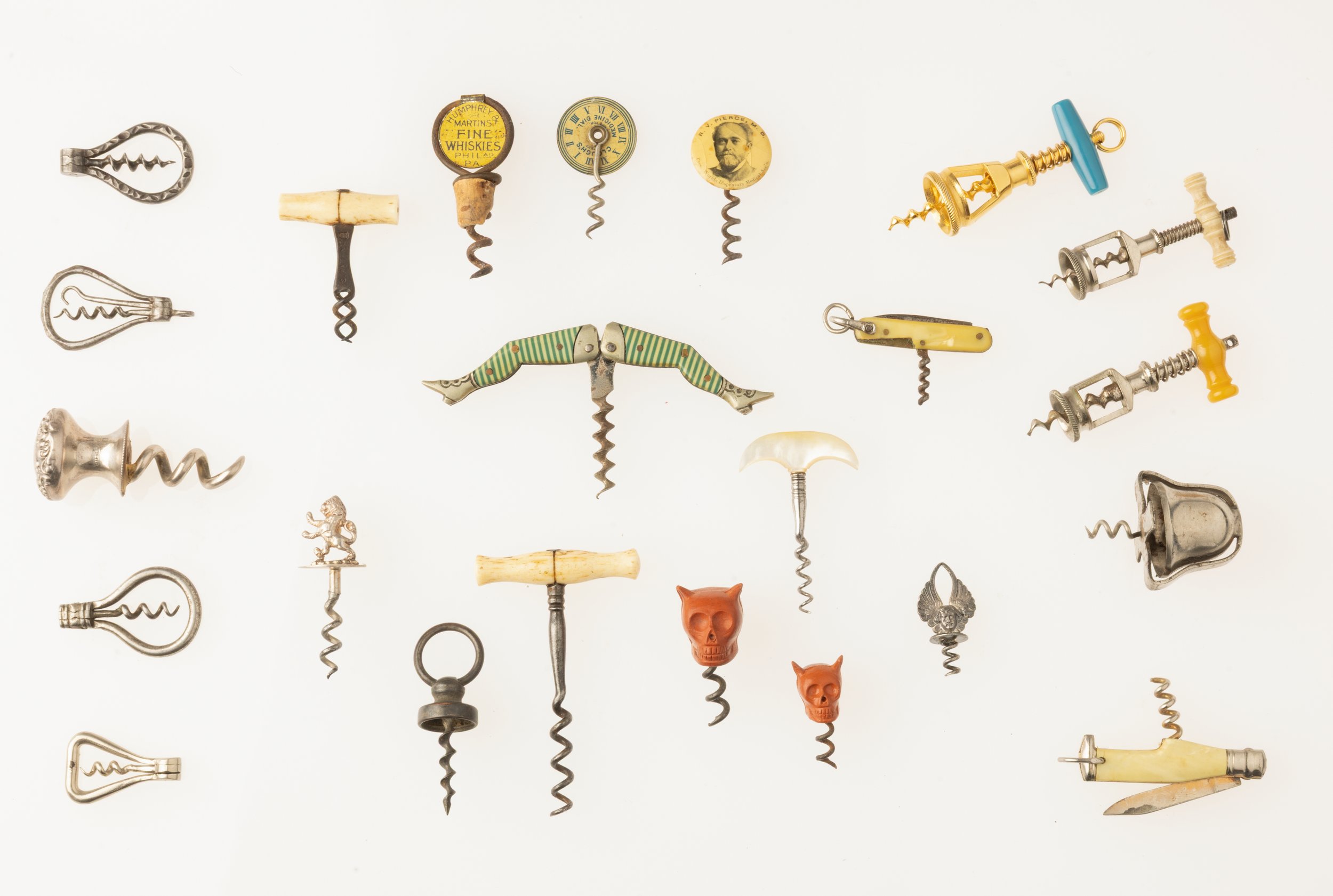
Austrian Corkscrews: Hagenauer, Aubock, Bosse, Baller, and Richard Rohac
Vienna was a very important center for 20th century design starting with the Art Deco period up through the Mid Century. This mini collection features corkscrews from Karl Hagenauer, Carl Aubock, Walter Bosse, Herta Baller, and Richard Rohac.
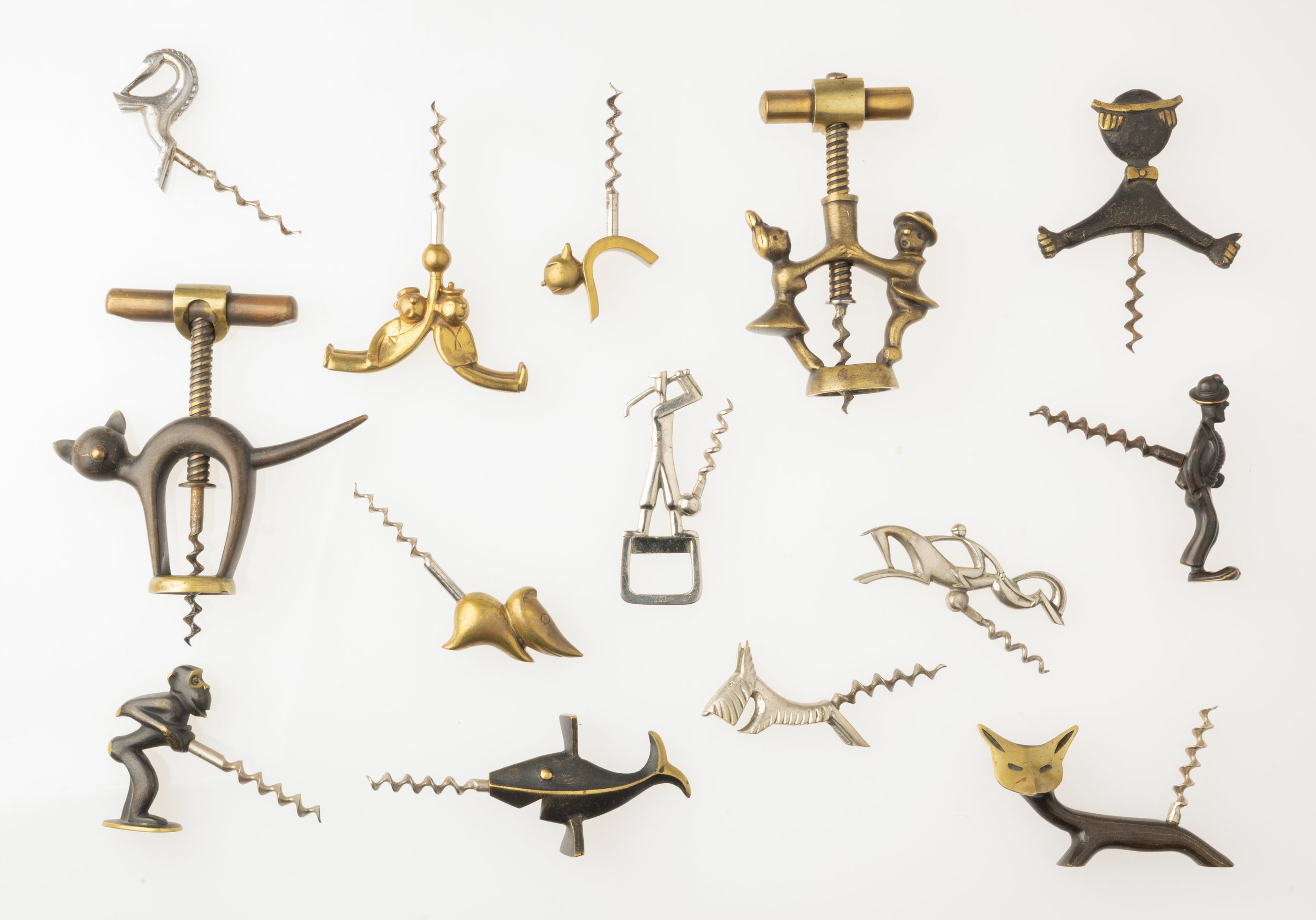
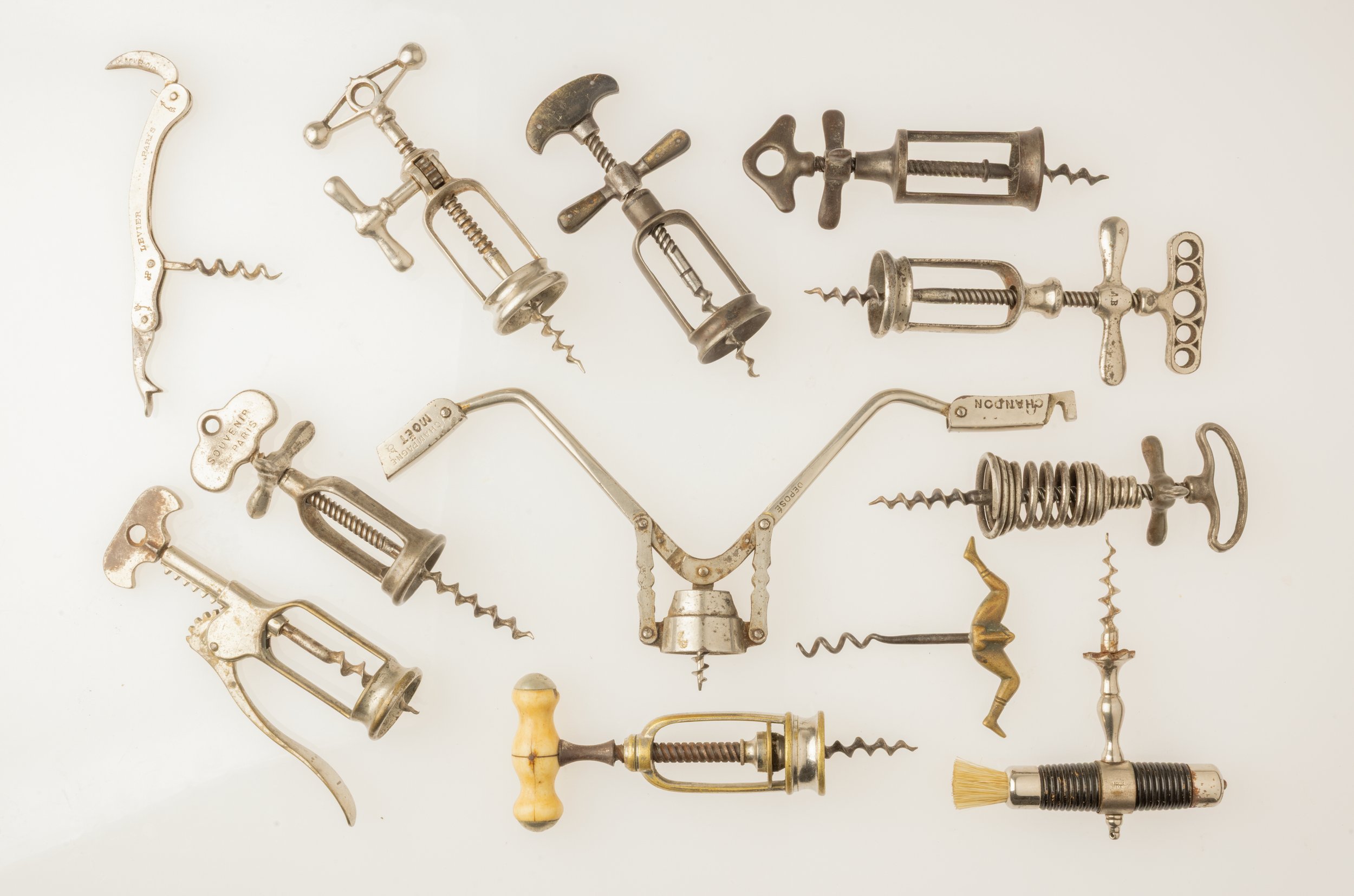
French Patents
There is a certain artistry to the French corkscrew patents. While they are mechanical in nature, they have a beauty that the other European countries and the United States don't exhibit.
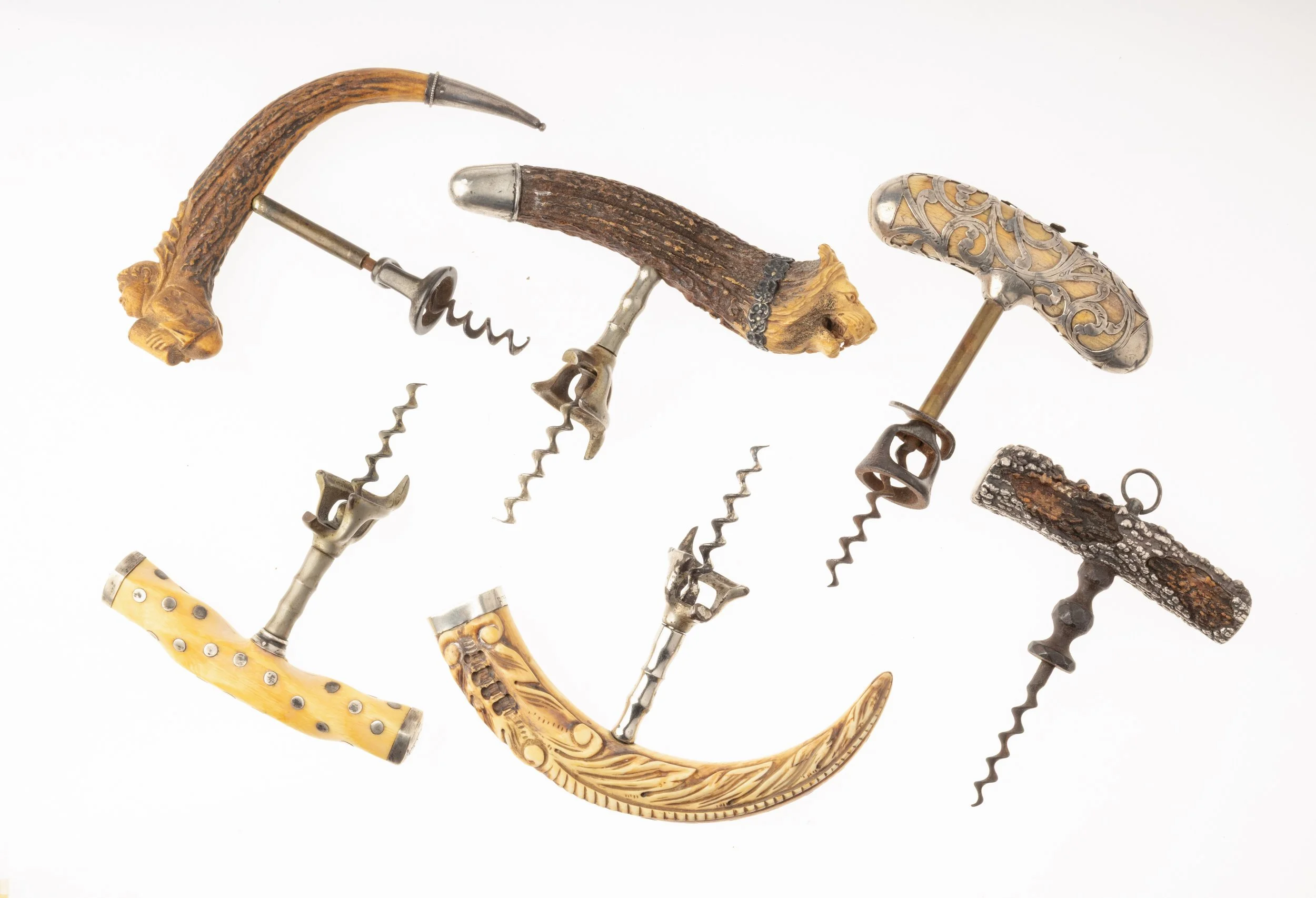
Carved Horn Corkscrews
During the last quarter of the 19th century, silversmiths and cutlers, mostly all over the eastern seaboard, but also in San Francisco started producing decorative utilitarian corkscrews from walrus and elephant tusks, horns from deer, pronghorn, elk, etc. They decorated them with sterling silver.
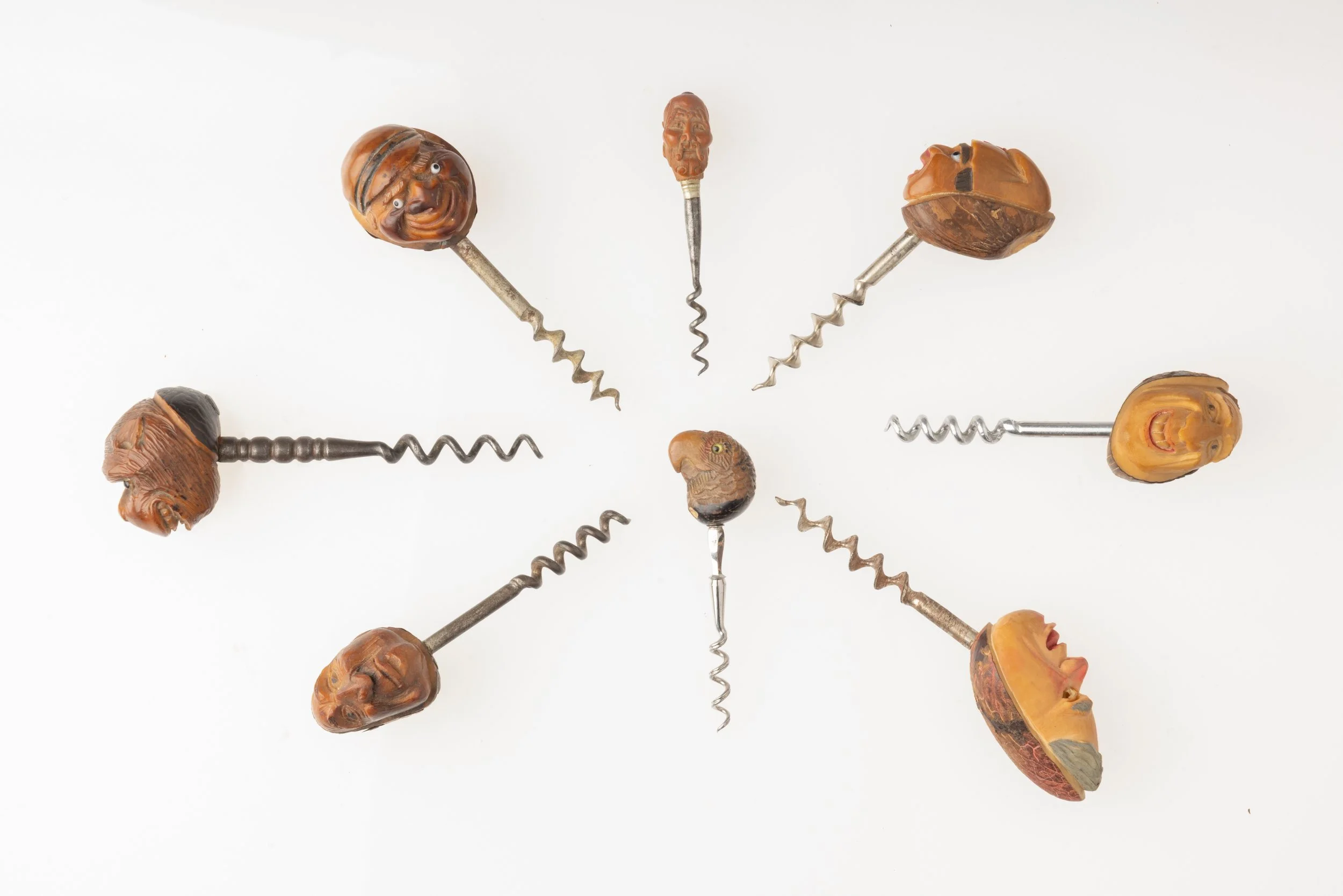
Corozo Nut Corkscrews
At the beginning of the 20th century ivory corkscrews were all the rage. Luckily, an alternative to elephants and walrus tusk was found by the French. Someone realized that the Tagua or Corozo nut that grew in abundance in South and Central America could be carved and polished to look like ivory.
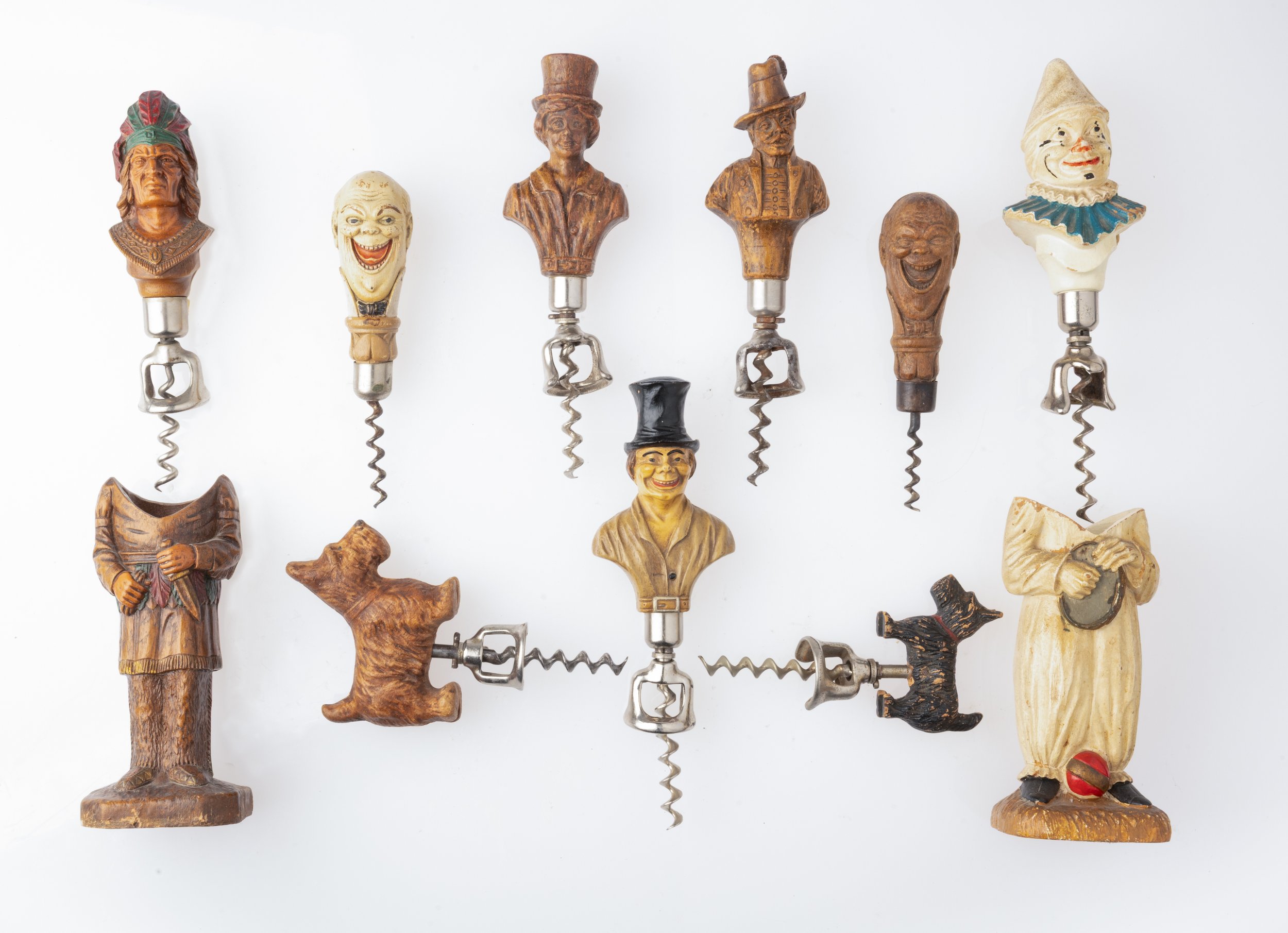
Syroco Corkscrews
The Syracuse Ornamental Company was founded in Syracuse, NY in 1890 by Adolph Holstein. The designers would carve a wooden object and create a metal mold of that object. Then by using wood pulp and resin they would create decorative objects. They started making corkscrews in the 1940s. Very creative and very American!
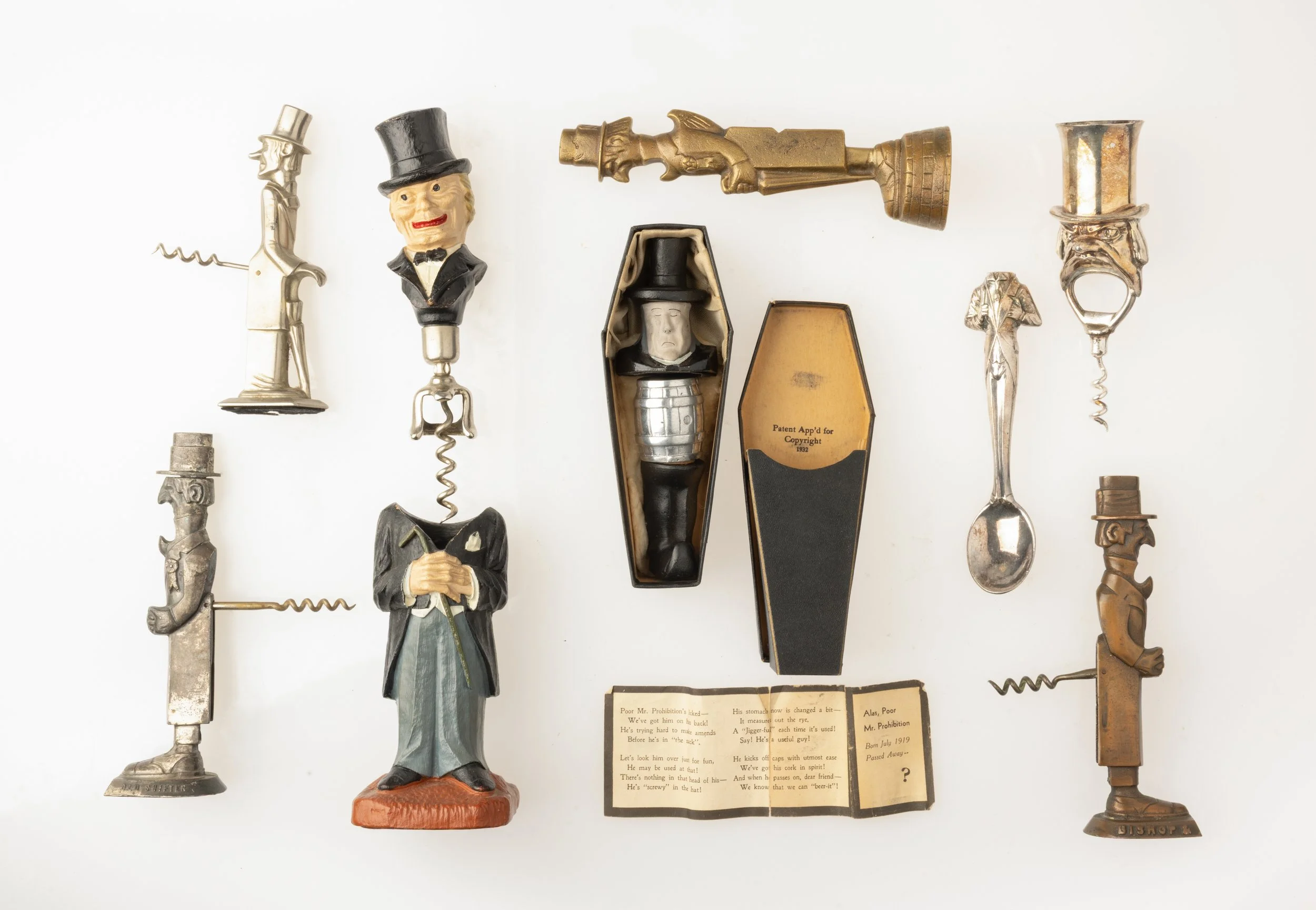
Volstead Corkscrews
Prohibition of the manufacture, distribution, and sale of alcoholic products was in effect from 1920-1933 in the United States. When the Volstead Act was repealed in 1933, creative designers, tongue in cheek, produced corkscrews in Senator Volstead's image.
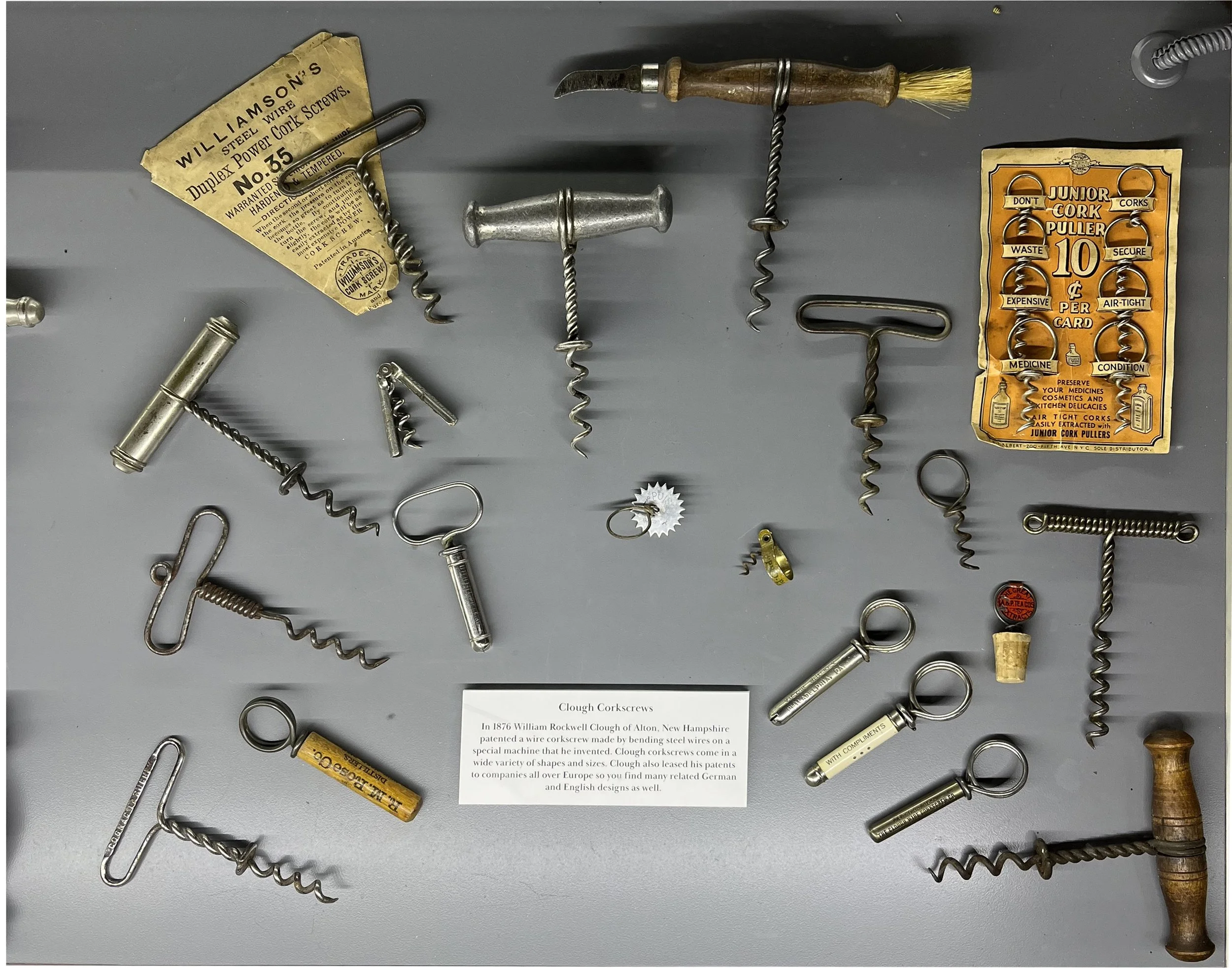
Clough Corkscrews
In 1876, William Rockwell Clough of Alton, New Hampshire patented a wire corkscrew made by bending steel wires on a special machine that he invented. Clough corkscrews come in a wide variety of shapes and sizes. Clough also leased his patents to companies all over Europe so you can find many related German and English designs as well.