
‘Best Six’
In both the CCCC and the ICCA Clubs, there is a requirement that members assemble their “best six acquisitions” for that year. It doesn’t have to be the best six from that year though. It could be a random or a themed best six or even, a best six from that calendar year. Unfortunately, I have been lax in keeping records through the years, so there are only a few years pictures here.
In this section, you will also find articles published in the club newsletters.
2025
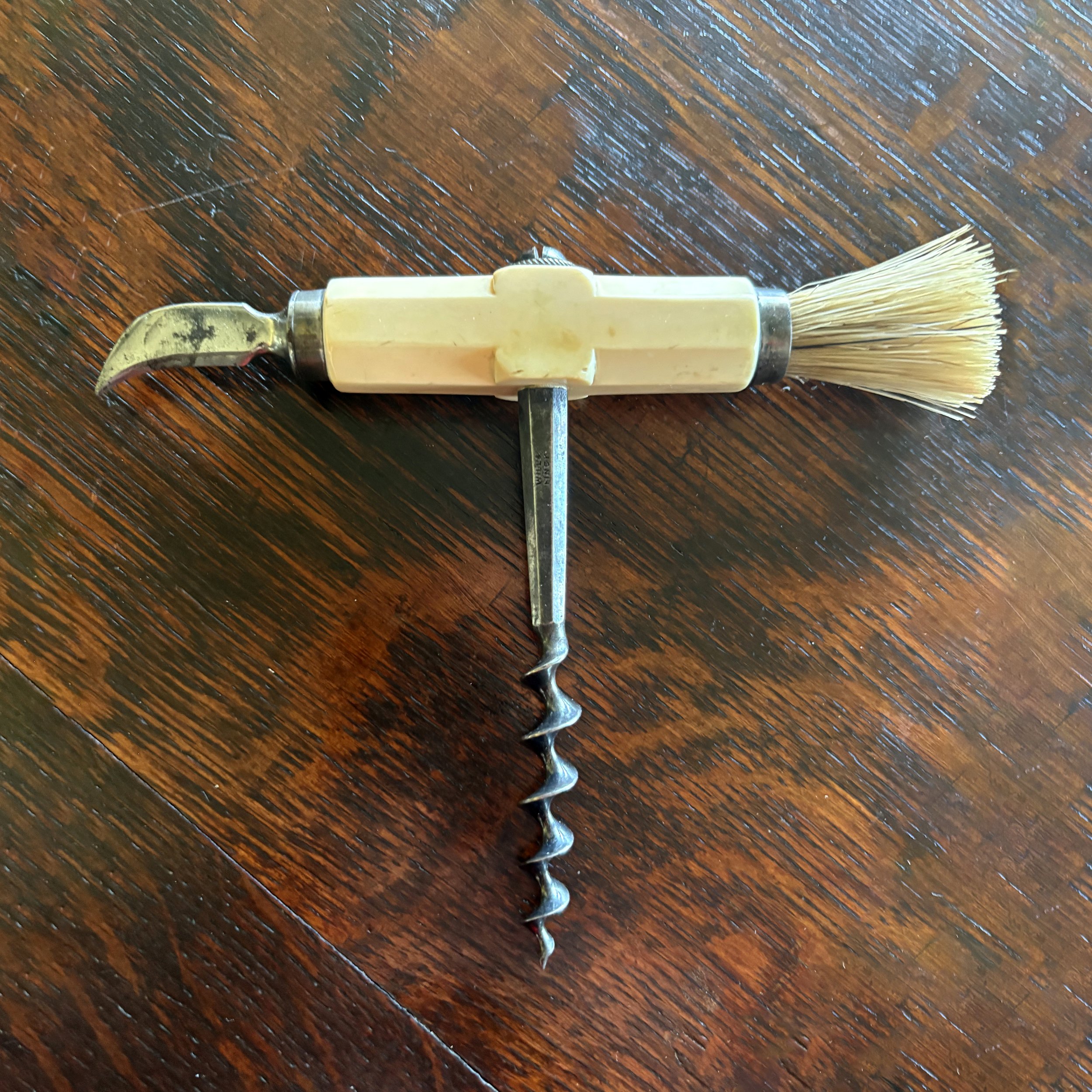
Will & Finck
San Francisco late 1800s T Handle Corkscrew with foil cutter and brush
Marked with WILL on top and FINCK below
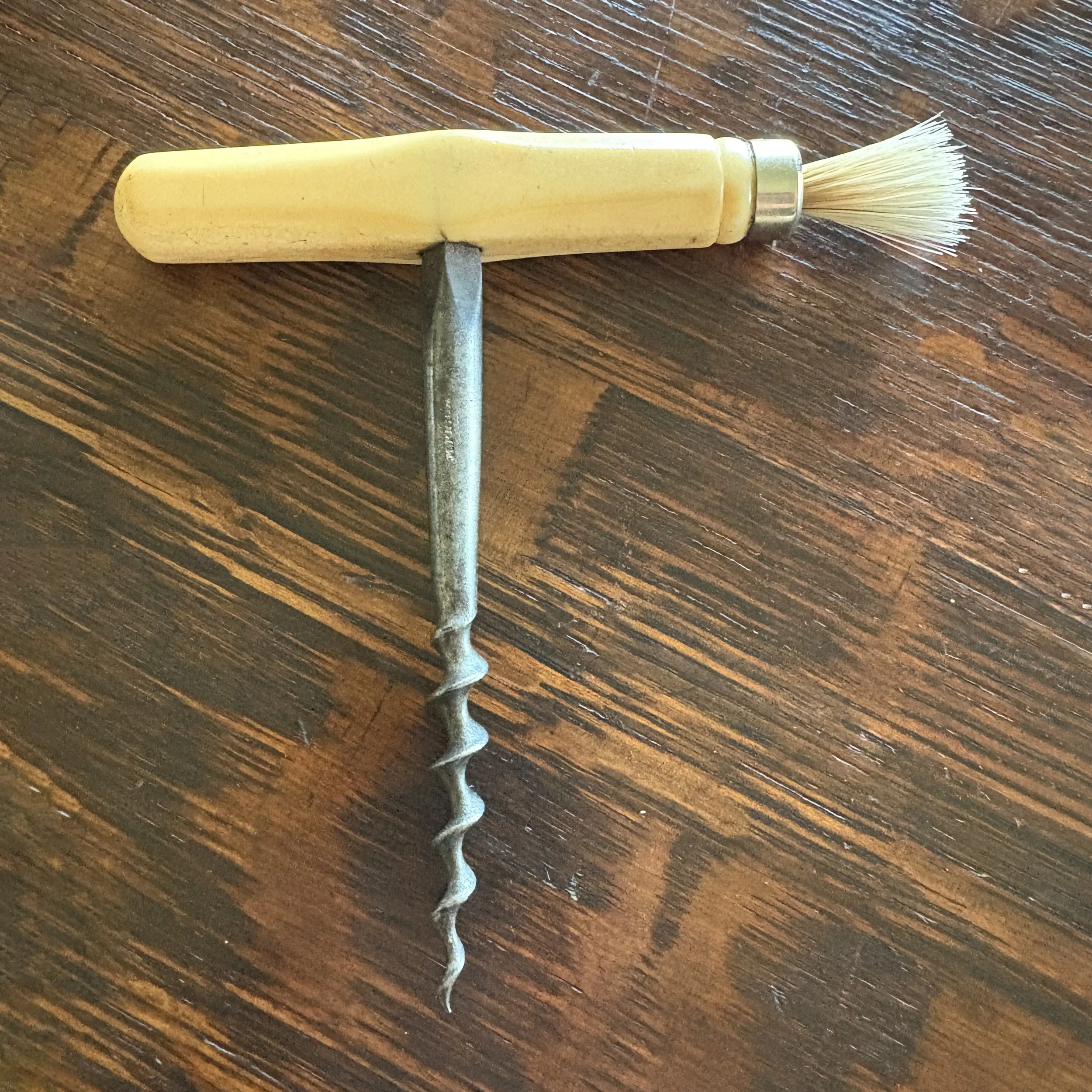
Michael Price
San Francisco late 1800s T Handle Corkscrew with brush
Marked M. PRICE
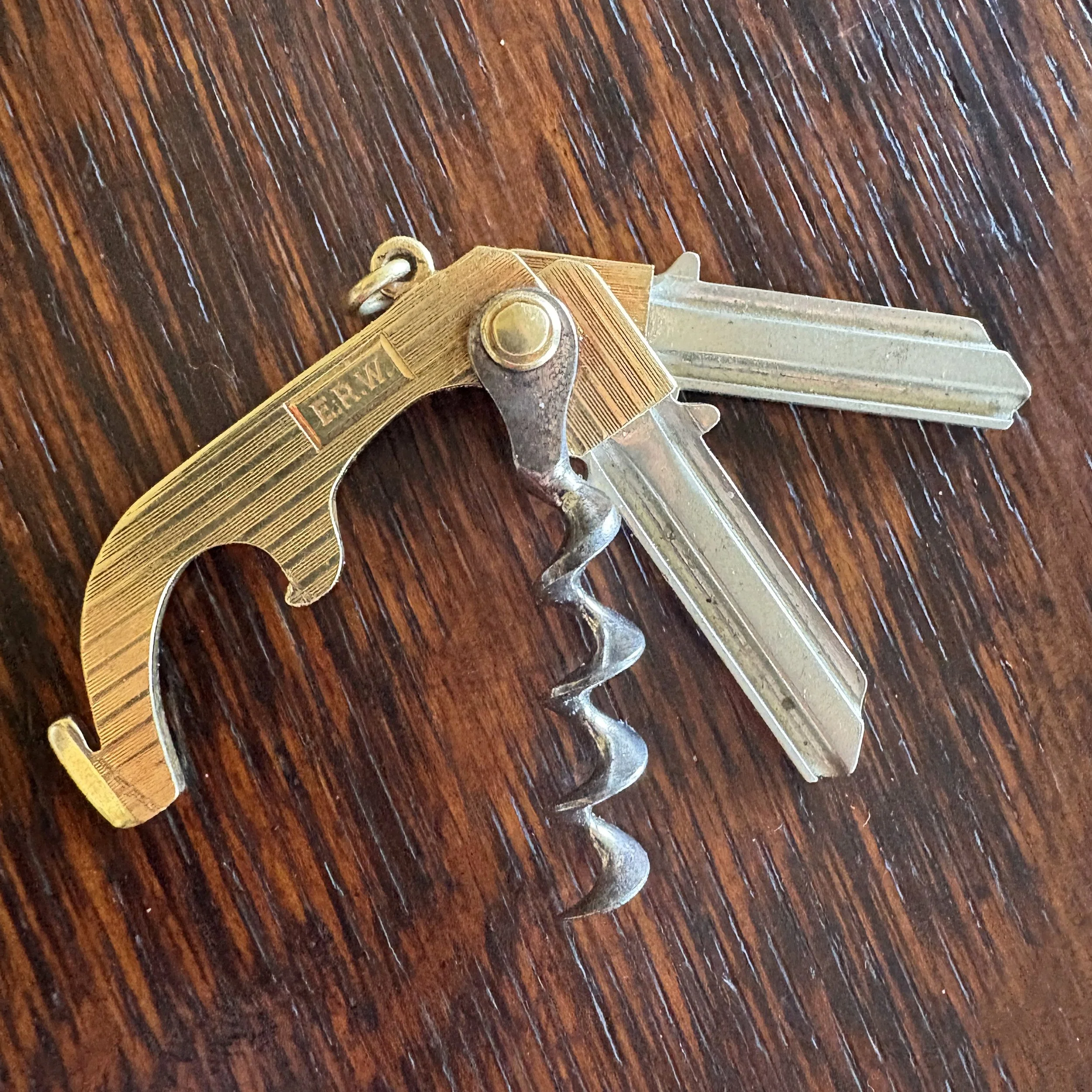
Robert Mclean Patent
Corkscrew, Bottle Opener, and double key with initials of owner ‘ERW’
Marked PAT FEB 23 1926
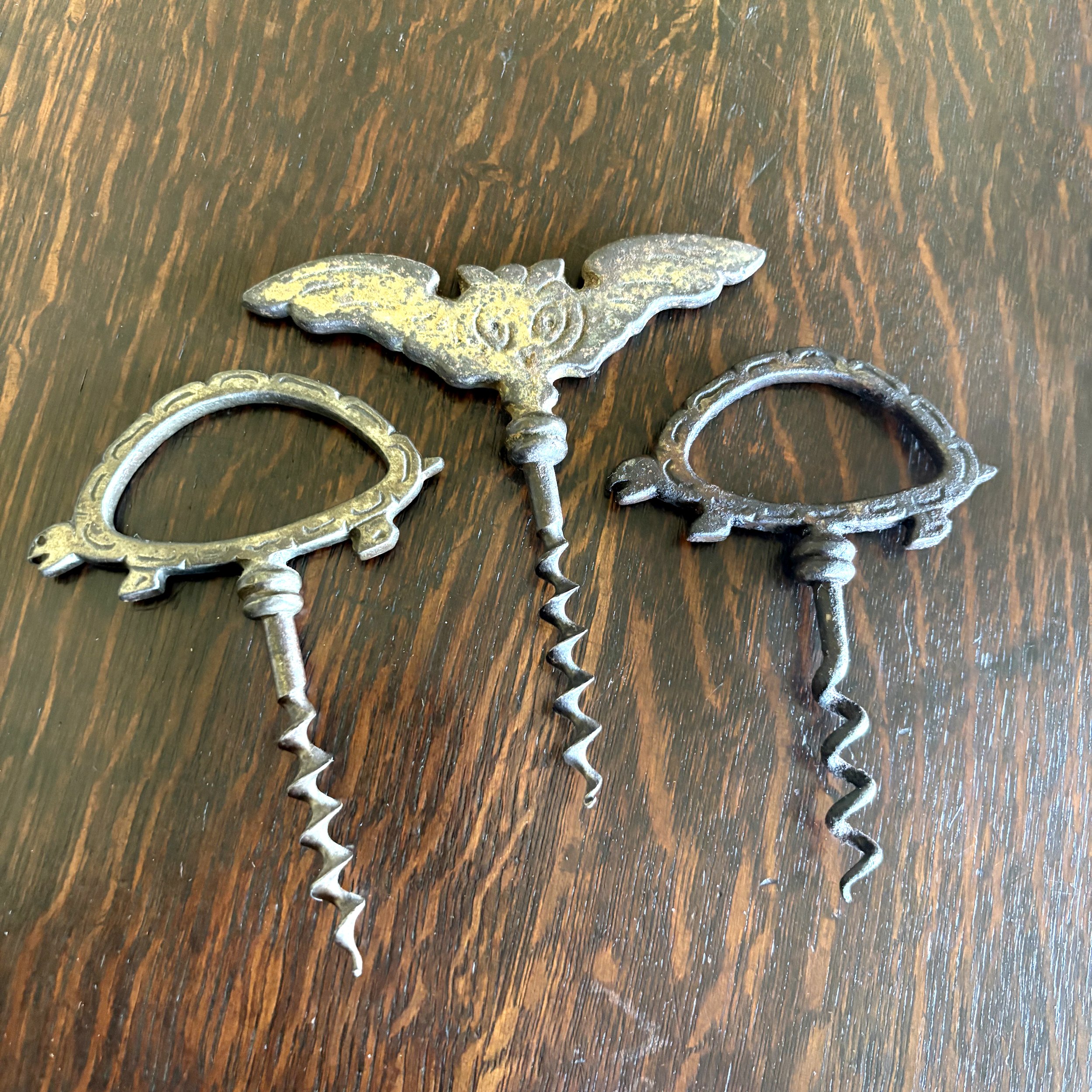
From Left to Right:
Hugo Berger
Turtle with cyphered helix circa 1910
GOBERG
Marked GES. GESCH (German legally protected)
Owl corkscrew circa 1910
GOBERG
Marked on the shaft, but indecipherable
Turtle with round helix circa 1910
GOBERG
No marks
2024
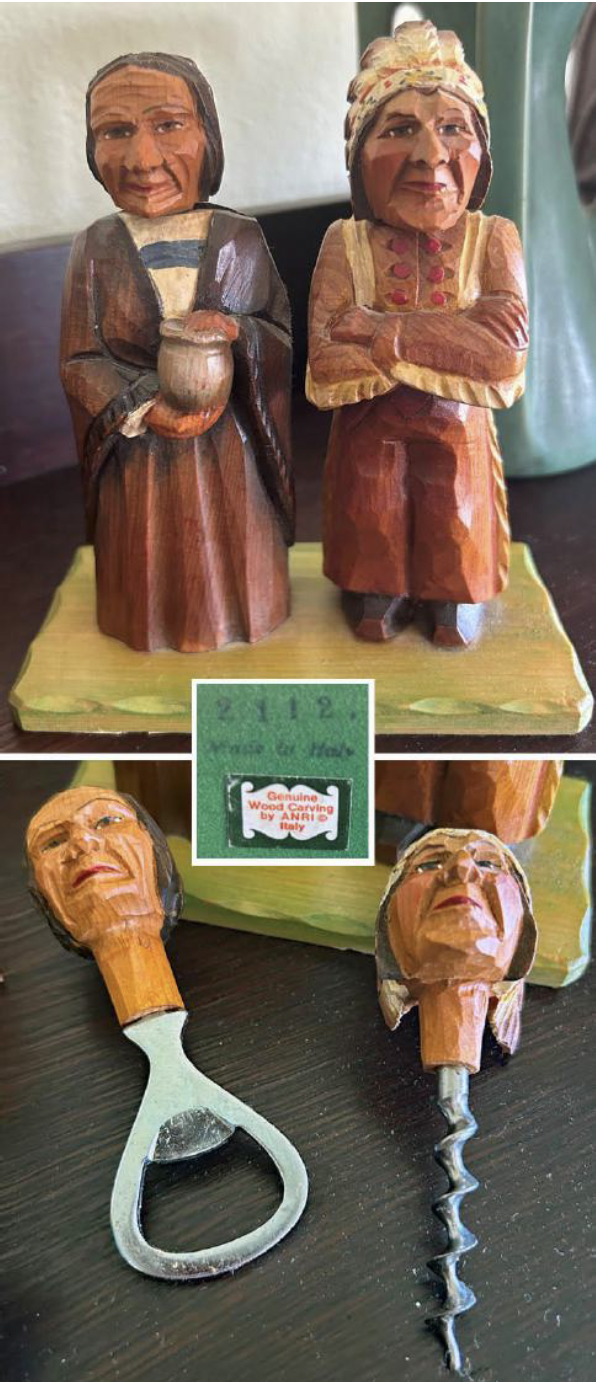
My Anri Cotton Club Bar Set
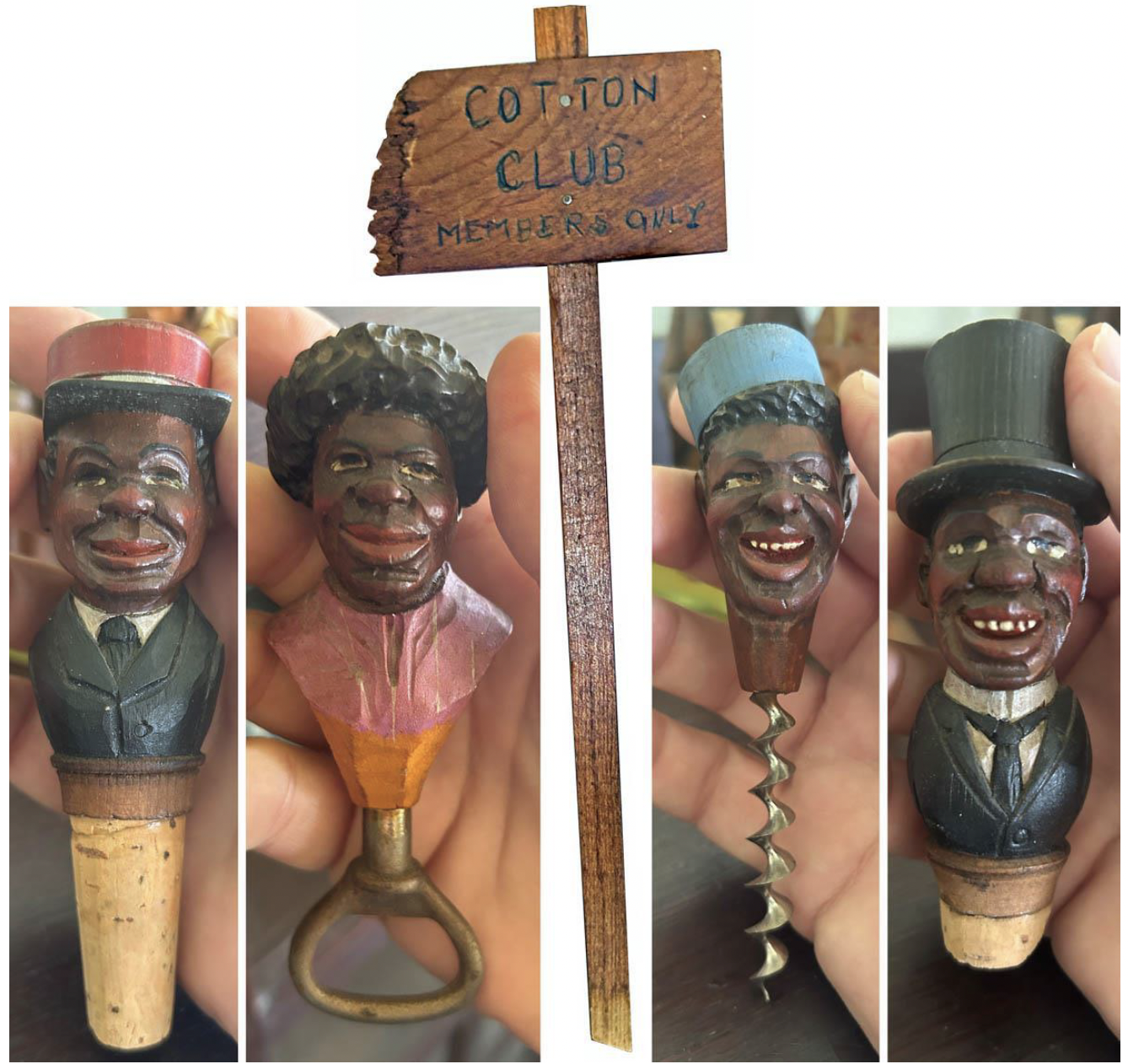
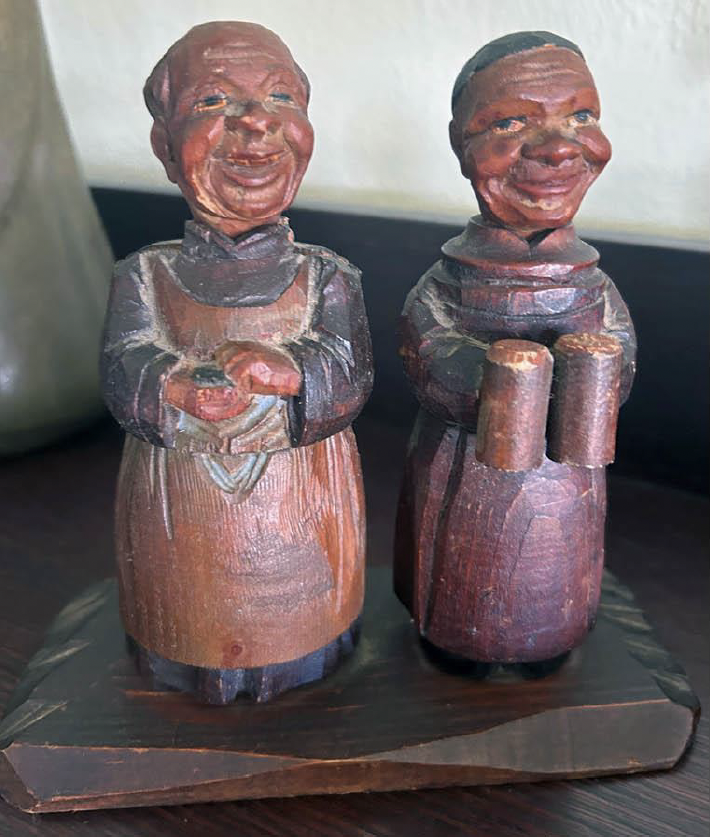
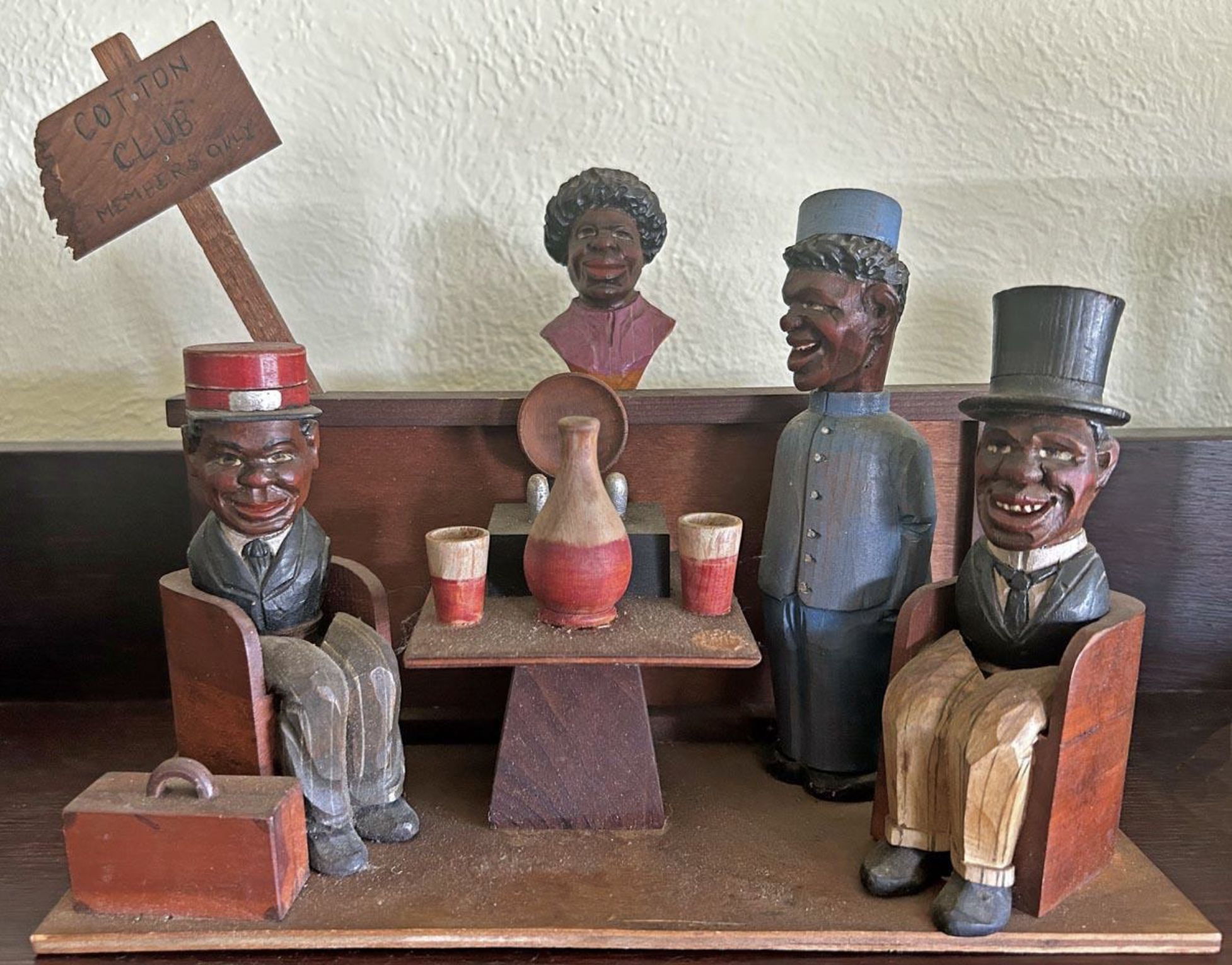
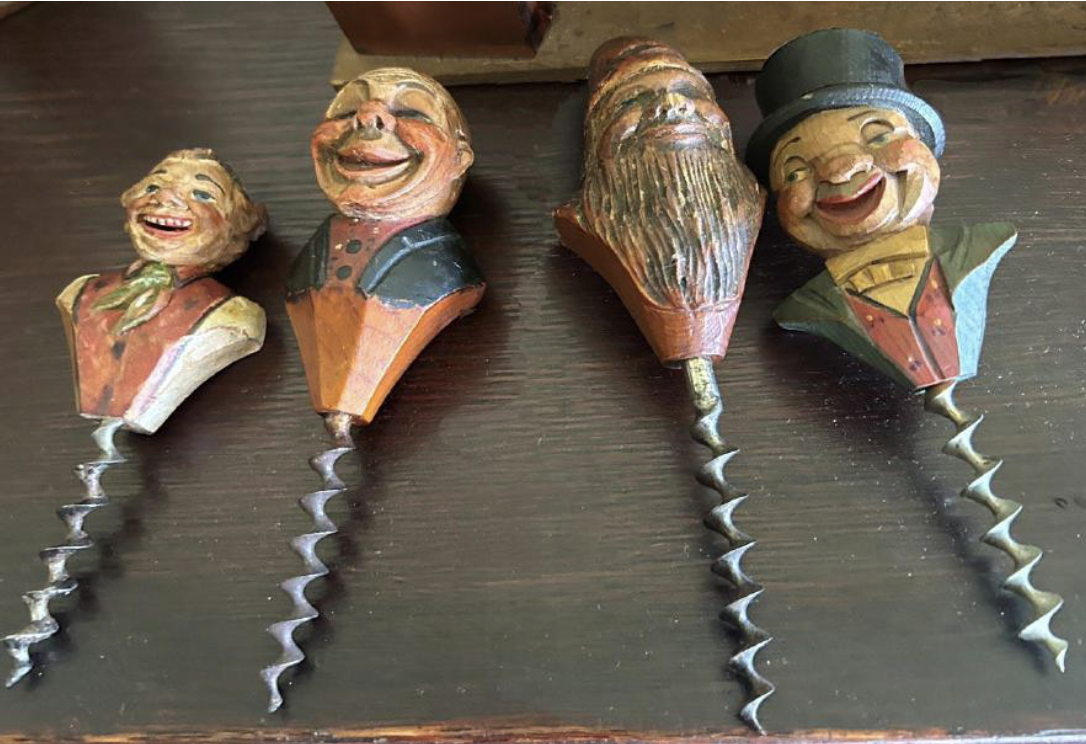
I have bought and sold Anri for many years. Initially, I was attracted to these pieces because of their connection to one of my favorite regions of Italy. I have been in the wholesale wine industry since 1979. The wines of Alto Adige have always been some of my favorites, I was able to visit there on a wine industry trip in 1998 that is respectfully referred to as “The Death March” because of the ten days of three wineries per day. On that trip, there was no opportunity to visit the Val Gardena, known as "Gröden" valley, where ANRI comes from.
First, a little history. ANRI was founded in 1912 by Josef Anton Riffeser. This was before the South Tyrol was part of Italy. That didn’t happen till 1919, after the end of World War I. Prior to Josef Anton starting ANRI his father had spent several decades traveling through Europe selling the carvings produced by villagers in the Val Gardena. The name ANRI came from the first two letters of his first name and his last name.
As I mentioned, I have spent years buying and selling Anri with no thought of actually collecting pieces. I was more focused on more serious corkscrews and this helped fund those. I retired a little over a year ago. At that point I refocused my attentions and found a new love for these historic, handcrafted items.
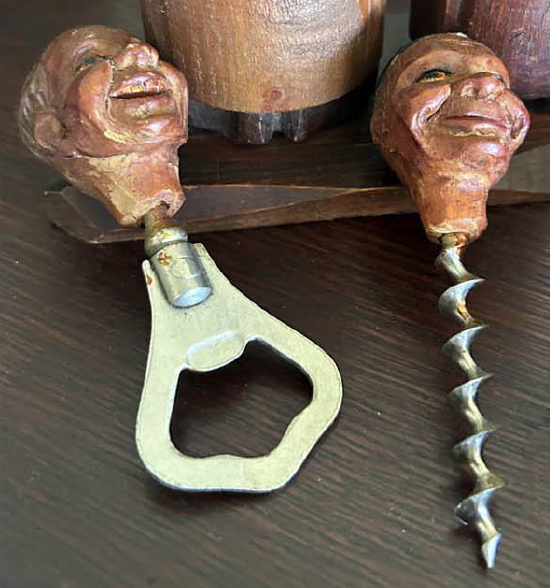
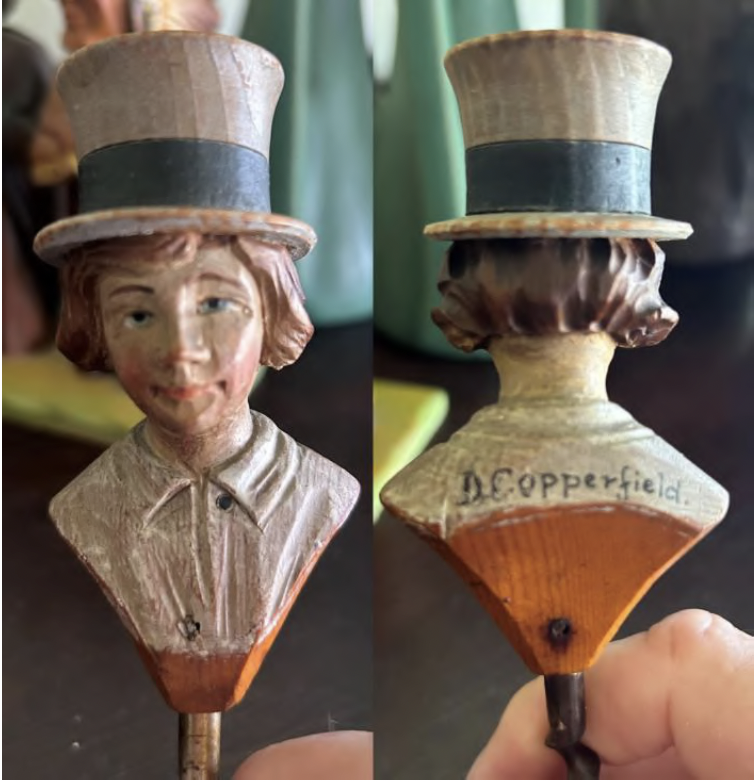
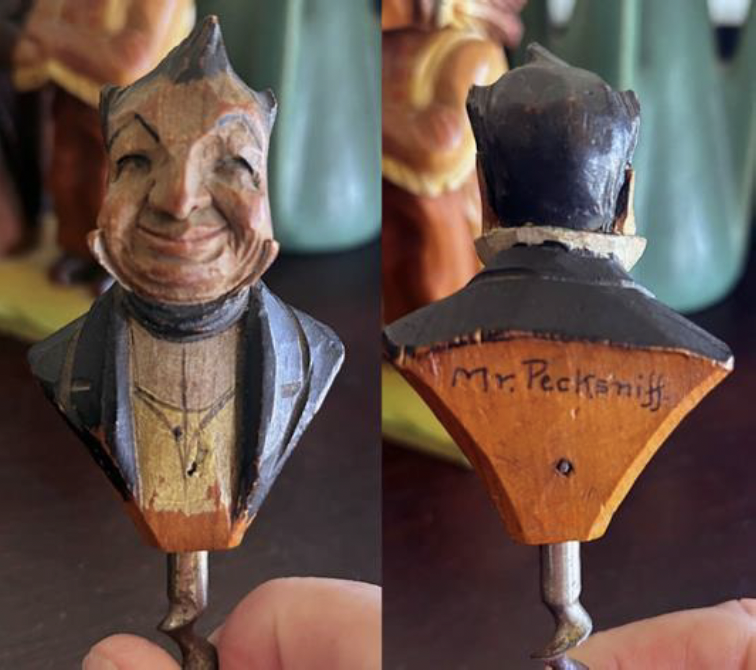
Pictured in this article are my best Anri pieces with the ultimate being the Cotton Club Bar Set. Until I acquired the Cotton Club my best pieces were the David Copperfield and Pecksniff Dickens character corkscrews and the Native American Bar Set. These are spectacular and very, very rare but pale compared to the Cotton Club Bar Set.
The Cotton Club was a New York City nightclub that was open from 1923 to 1940. The club was open during Prohibition and during the Jim Crow era of racial segregation. Blacks could not patronize the club, but all the great black performers of the era performed there. I believe the carving shows the workers at the club rather than the patrons. There are several versions of this set, but most have survived with missing pieces or damaged. They only show up every few years. This set is excellent because all the pieces have survived except for one glass. Having the original sign is very important.
Now the Cotton Club is my favourite piece in the ANRI collection. I have a renewed appreciation for the history of ANRI. In fact, in September we are visiting Alto Adige and I hope to carve out some time (no pun intended) to visit the Val Gardena.
2023
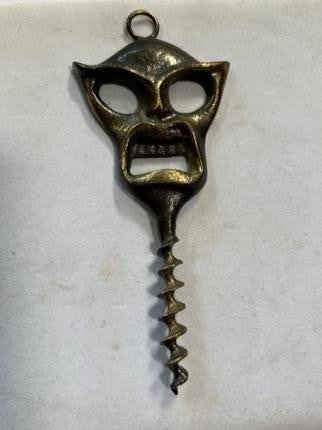
Pal-Bell Figural Brass Corkscrew
Maurice Ascalon was a Hungarian Jew who immigrated to Israel (then the British Mandate of Palestine) in 1934. He started Pal-Bell in the late 1930s. He made many different brass and bronze items, but few corkscrews. His grandson has not seen the corkscrews appear in any catalogues.
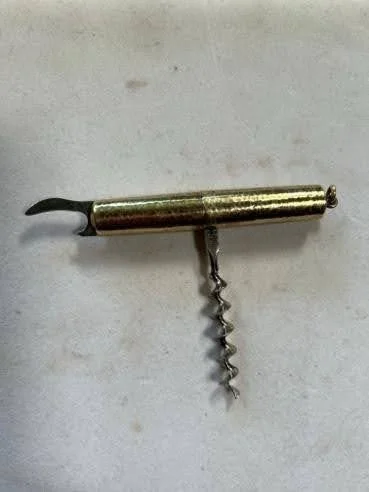
Hammered Gold Roundlet (no Carat mark) with caplifter marked GERMANY
I love precious roundlets. I have many Sterling Silver ones. I only have a few gold ones. It is also hammered which takes me back to my other love, the Arts & Crafts Movements of the early 20th century. While this is German made, it is more reminiscent of the American Arts & Crafts movement because of the hammering and could have been an export piece.
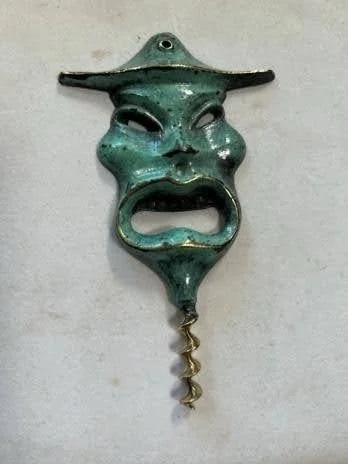
Pal- Bell Figural Corkscrew Figural Brass Corkscrew with Green Verdigris
I picked up both of these corkscrews separately, but within weeks of each other this year.
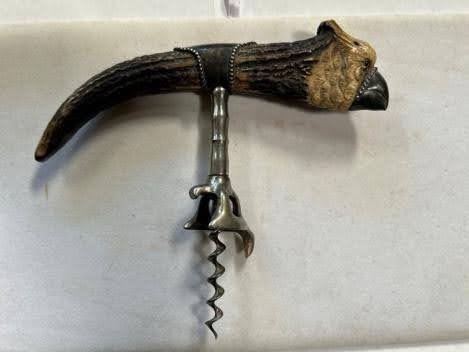
Carved Figural Antler of a Cockatiel with Sterling Beak and Strap
I saw this and had to have it.
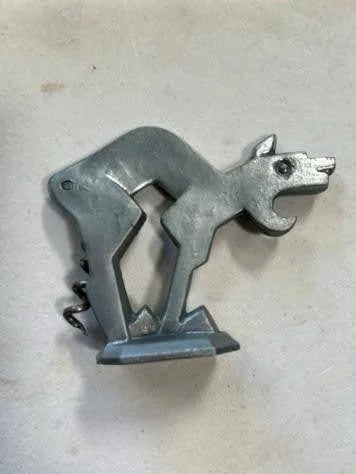
Negbaur Scary Cat Corkscrew
The cat is marked NEGBAUR N.Y. U.S.A. PAT. PEND. 220 , I have always liked this guy and I got an opportunity for a reasonable Buy It Now on Ebay
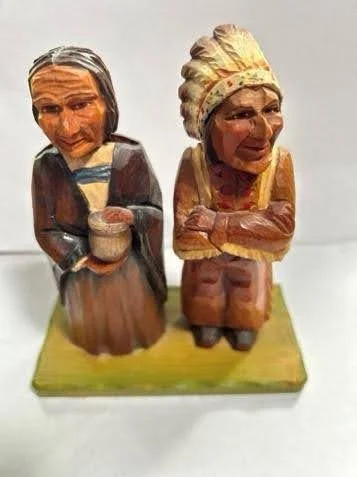
Anri Native American Bar Set c. 1930s
I was able to win this at an auction for an unbelievable deal. I have always wanted one since I live in Tucson, the American West. I find it fascinating that a carver in Alto Adige up in the Dolomites would carve a piece with such American historical significance back in the early 20th century.
2021
My Relationship with the Decorative Arts of the Arts & Crafts Era and My Corkscrews
In approximately 1985, I started collecting two things. First, I fell in love with the furniture of the American Arts & Crafts Era and all the decorative arts that went along with furnishing a house in that time period. The furniture was solid. It was linear. It was simple, but decorative. It was honest. At the same time, it was time to start picking up old corkscrews. I was going into the antique stores and estate sales already and I was in the wholesale wine industry… what better hobby? I never thought that those two hobbies would converge. Well, thirty plus years later, they have in this article.
WHAT WAS THE ARTS & CRAFTS ERA?
The Arts & Crafts era started in the latter part of the 19th century in England. It was a reaction to industrialization and the poorly designed and built furniture that came out of it. The movement didn’t get to the United States until the turn of the 20th century. As is usually the way, the movement in the United States was different than what was going on in England. The American architects of the movement were Gustav Stickley and Elbert Hubbard (this is a gross simplification for this article). It was a movement back toward the craftsman making the furniture instead of the machines. The furniture is mostly made from fumed American white oak that is quartered to bring out the tiger-striped grain. Then the furniture was built using pegs instead of nails and through tenon construction. It made the furniture extremely solid and durable. The ethos that went along with this furniture was that it was furniture you could trust and built character and honesty in the people who bought the furniture. It was supposed to make you a good, ethical, moral person.
The best part of the furniture for me was that it created the opportunity to develop an entire decorative arts movement around the furniture. The furniture was dark so you needed organic pottery to go along with it… Thus, the American Art Pottery movement was born. The handles on the furniture was mostly made of hammered copper because it showed the hand craftmanship of the metal worker and accented the beauty of the furniture. And the silver was hand hammered to go along with the copper. The Arts & Crafts Era only lasted officially from 1900-1910. Then it became unpopular.
WHERE IS THE RELATIONSHIP TO CORKSCREWS?
There were many small companies who operated during this era. Over the years I have found corkscrews that I consider Arts & Crafts Era pieces. What I will do now is relate those to other, non-corkscrew items made of the same materials as the corkscrews.
GERMAN ARTS & CRAFTS
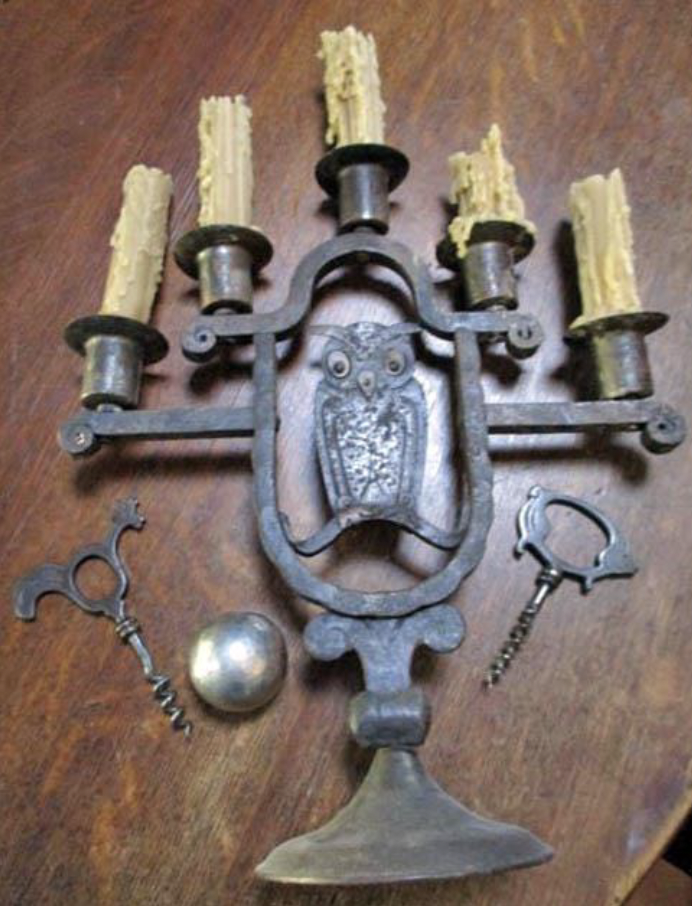
I have started out here because the United States was not the only country that took its cues from 19th century England. Hugo Berger was one of the most important German Arts & Crafts producers. I have included a picture of a Goberg owl candelabra and two Goberg figural corkscrews. I also have a hammered silverplate corkscrew marked WMF to show that he was not the only producer during this time period in Germany.
HAMMERED COPPER
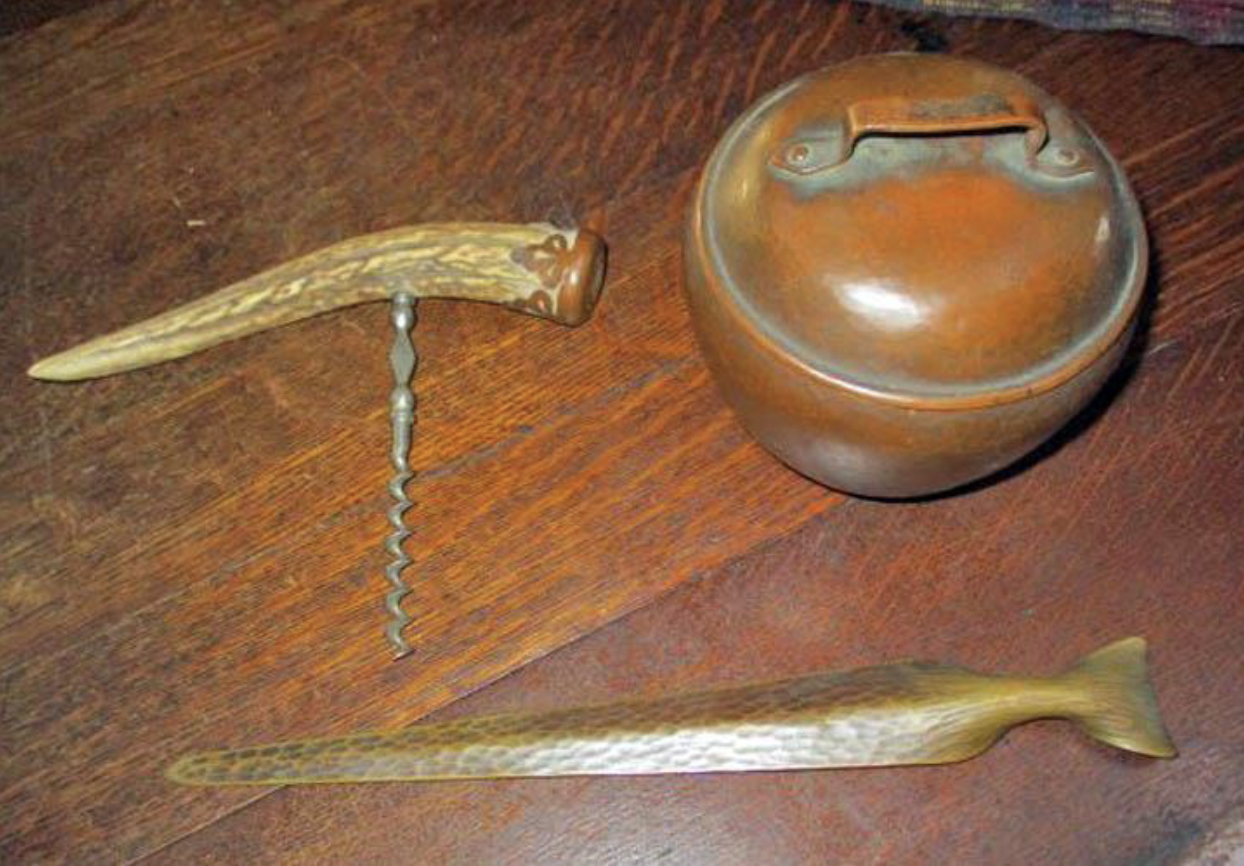
Hand-hammered copper was by far the most common metal used during the Arts & Crafts era in America. Most famous is Elbard Hubbard’s Roycroft. Hubbard was a prolific author and philosopher of the Arts & Crafts era. His shop in East Aurora, New York produced furniture, books, and decorative handhammered copper items. He died on the Lusitania when it sank in 1915. My examples of the Arts & Crafts copper that I have included are a very early hand-hammered humidor by the Kalo Shops in Chicago, a Roycroft letter opener, and a wonderful staghorn corkscrew that I found in a Tucson estate. The corkscrew has a hand-hammered copper end cap that was given to families that were part of the St. Nicholas Society of the City of New York. The Society was founded by Washington Irving and others as an organization to commemorate the history and heritage of New York and to promote good fellowship among the members. The first meeting was a dinner held on February 14, 1835.
HAMMERED STERLING
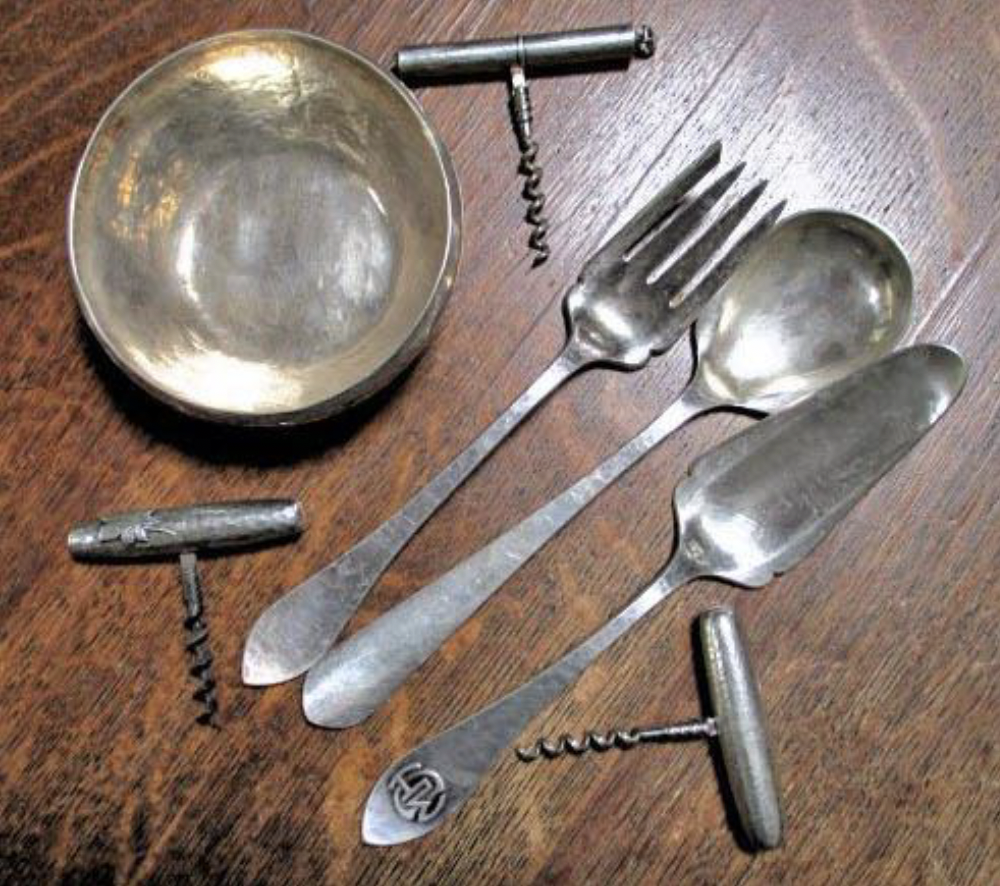
Hand-hammered sterling silver was the second most important metal used during the Arts & Crafts era. During the late 19th and early 20th centuries there were many small companies producing sterling tools such as button hooks multi-tool knives, money clips, smoking tools, etc. Corkscrews fit in this category. The wealthier Americans liked to have tools made of precious metals. I have included a Kalo hand beaten bowl and three serving pieces from the Kalo Shops in Chicago. The corkscrews are a handhammered Tiffany & Co. roundlet, an unsigned roundlet with a leaf and a beetle applied to the body (an argument could be made that this is a transitional Aesthetic Period piece), and sterling hand-hammered Fairchild roundlet.
STERLING SILVER
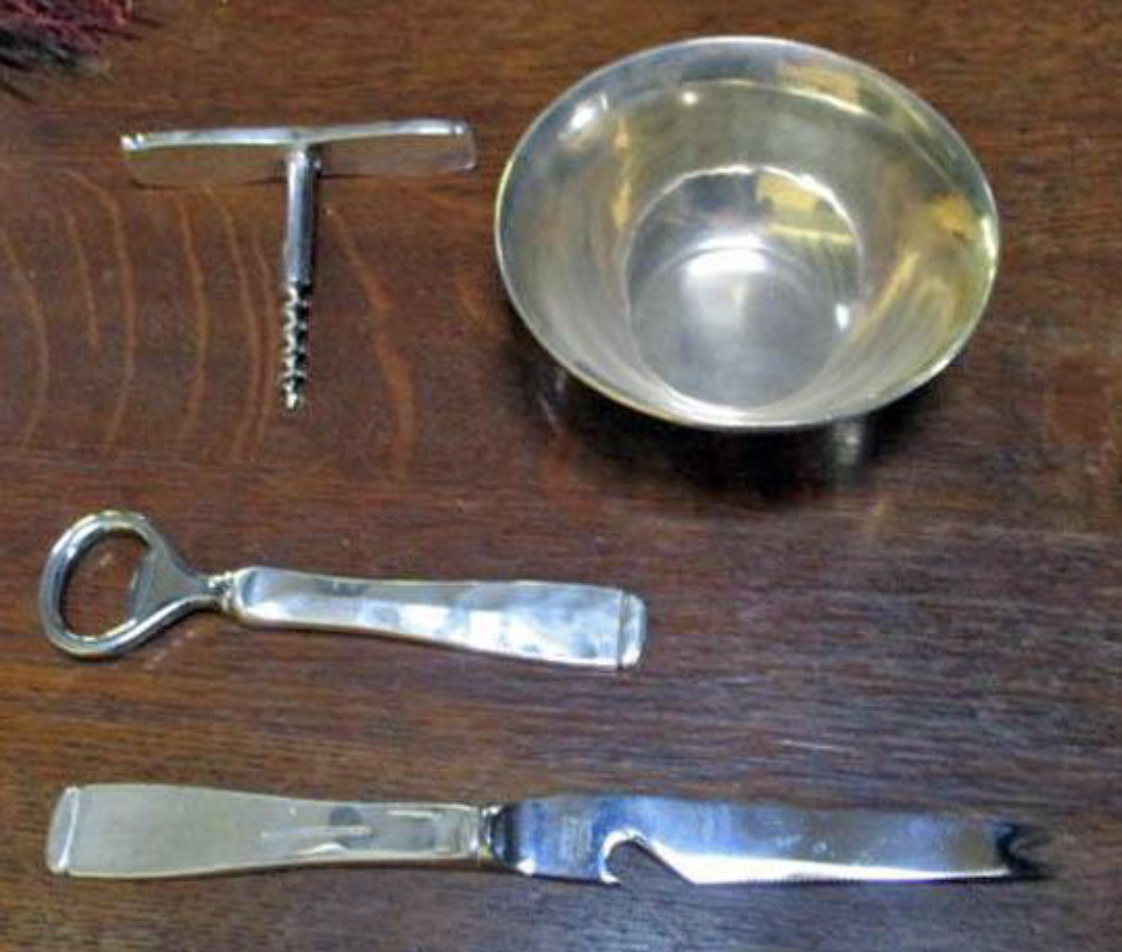
While the Arts & Crafts Movement in furniture ended in 1920, the sterling silver designs did not. They transitioned away from overt hand hammered pieces to more refined examples. Two great examples of that can be seen in the work of Arthur Stone and Porter Blanchard. I have included a bowl by Stone and a serving set by Blanchard.
CONCLUSIONS
I love the fact that I have been able to collect items over the years that satisfy both of my passions. I hope that this article has been informative and interesting. Please let me know if anyone would like better pictures of any of the pieces or the marking.
2021
My Relationship with the Decorative Arts of the Arts & Crafts Era and My Corkscrews
In approximately 1985, I started collecting two things. First, I fell in love with the furniture of the American Arts & Crafts Era and all the decorative arts that went along with furnishing a house in that time period. The furniture was solid. It was linear. It was simple, but decorative. It was honest. At the same time, it was time to start picking up old corkscrews. I was going into the antique stores and estate sales already and I was in the wholesale wine industry… what better hobby? I never thought that those two hobbies would converge. Well, thirty plus years later, they have in this article.
WHAT WAS THE ARTS & CRAFTS ERA?
The Arts & Crafts era started in the latter part of the 19th century in England. It was a reaction to industrialization and the poorly designed and built furniture that came out of it. The movement didn’t get to the United States until the turn of the 20th century. As is usually the way, the movement in the United States was different than what was going on in England. The American architects of the movement were Gustav Stickley and Elbert Hubbard (this is a gross simplification for this article). It was a movement back toward the craftsman making the furniture instead of the machines. The furniture is mostly made from fumed American white oak that is quartered to bring out the tiger-striped grain. Then the furniture was built using pegs instead of nails and through tenon construction. It made the furniture extremely solid and durable. The ethos that went along with this furniture was that it was furniture you could trust and built character and honesty in the people who bought the furniture. It was supposed to make you a good, ethical, moral person.
The best part of the furniture for me was that it created the opportunity to develop an entire decorative arts movement around the furniture. The furniture was dark so you needed organic pottery to go along with it… Thus, the American Art Pottery movement was born. The handles on the furniture was mostly made of hammered copper because it showed the hand craftmanship of the metal worker and accented the beauty of the furniture. And the silver was hand hammered to go along with the copper. The Arts & Crafts Era only lasted officially from 1900-1910. Then it became unpopular.
WHERE IS THE RELATIONSHIP TO CORKSCREWS?
There were many small companies who operated during this era. Over the years I have found corkscrews that I consider Arts & Crafts Era pieces. What I will do now is relate those to other, non-corkscrew items made of the same materials as the corkscrews.
GERMAN ARTS & CRAFTS
I have started out here because the United States was not the only country that took its cues from 19th century England. Hugo Berger was one of the most important German Arts & Crafts producers. I have included a picture of a Goberg owl candelabra and two Goberg figural corkscrews. I also have a hammered silverplate corkscrew marked WMF to show that he was not the only producer during this time period in Germany.
HAMMERED COPPER
Hand-hammered copper was by far the most common metal used during the Arts & Crafts era in America. Most famous is Elbard Hubbard’s Roycroft. Hubbard was a prolific author and philosopher of the Arts & Crafts era. His shop in East Aurora, New York produced furniture, books, and decorative handhammered copper items. He died on the Lusitania when it sank in 1915. My examples of the Arts & Crafts copper that I have included are a very early hand-hammered humidor by the Kalo Shops in Chicago, a Roycroft letter opener, and a wonderful staghorn corkscrew that I found in a Tucson estate. The corkscrew has a hand-hammered copper end cap that was given to families that were part of the St. Nicholas Society of the City of New York. The Society was founded by Washington Irving and others as an organization to commemorate the history and heritage of New York and to promote good fellowship among the members. The first meeting was a dinner held on February 14, 1835.
HAMMERED STERLING
Hand-hammered sterling silver was the second most important metal used during the Arts & Crafts era. During the late 19th and early 20th centuries there were many small companies producing sterling tools such as button hooks multi-tool knives, money clips, smoking tools, etc. Corkscrews fit in this category. The wealthier Americans liked to have tools made of precious metals. I have included a Kalo hand beaten bowl and three serving pieces from the Kalo Shops in Chicago. The corkscrews are a handhammered Tiffany & Co. roundlet, an unsigned roundlet with a leaf and a beetle applied to the body (an argument could be made that this is a transitional Aesthetic Period piece), and sterling hand-hammered Fairchild roundlet.
STERLING SILVER
While the Arts & Crafts Movement in furniture ended in 1920, the sterling silver designs did not. They transitioned away from overt hand hammered pieces to more refined examples. Two great examples of that can be seen in the work of Arthur Stone and Porter Blanchard. I have included a bowl by Stone and a serving set by Blanchard.
CONCLUSIONS
I love the fact that I have been able to collect items over the years that satisfy both of my passions. I hope that this article has been informative and interesting. Please let me know if anyone would like better pictures of any of the pieces or the marking.
2020
An Article about my Mini Collection of Haff and Fairchild Patents
I have been collecting corkscrews since the early 1980s. I have always loved roundlets. I am especially drawn to precious metal pieces. I have 70 sterling and a few gold, give or take a few. I spend a lot of time on the silver marks website trying to identify the various producers. It is fun to find new companies. I find it fascinating that citizens of means would carry around these little portable corkscrews so as to always be prepared if the opportunity for a drink were to arise. I chose to highlight the work of the two Le Roys because both of these patents seem more 20th century and almost Arts & Crafts era in design compared to the more Art Nouveau pieces produced by, for example, Gorham or La Pierre.
The Patents and the History
My mini collection article is on the Feb. 1, 1887 Le Roy Haff and the Aug. 21, 1888 Le Roy W, Fairchild roundlet patents. Both men had silver companies in New York City.
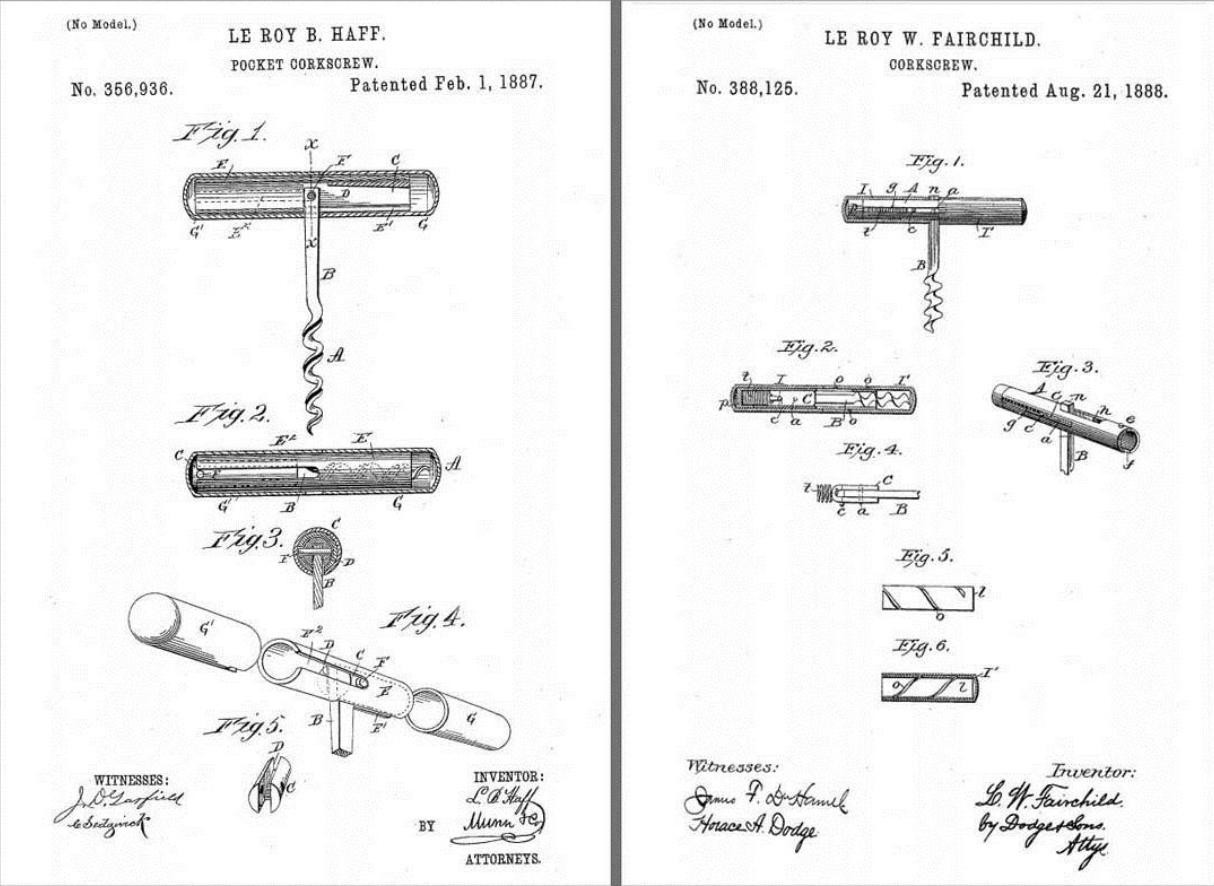
Le Roy B. Haff was a partner in Dominick & Haff (1868-1928). He started working for the company as a bookkeeper in 1867 for William Gale, manufacturing silversmith. By 1869, the company name was changed to Gale, Dominick, and Haff and finally, in 1872 to Dominick & Haff. According to his obituary, “Mr. Haff was known as a man of modest and retiring disposition, yet aggressive when necessary. He was well liked and respected by all with whom he came in contact, and universally regarded as a thoroughly honest, upright, and sagacious businessman.”
Le Roy W. Fairchild rose to be the owner of L.W. Fairchild & Co. having first worked for John Rendell (silversmith) perhaps starting as early as 1840. It is unclear when he took over the company. However, it is clear that he retired in 1890 at the death of his wife and that his sons carried on the family business under different names... Fairchild & Johnson, then Fairchild & Co. until closing someplace in the late 1920s. When I get into the descriptions of the Fairchild marks, it will be easy to see that the corkscrew was manufactured by all the different Fairchild companies. Another really interesting fact about the Fairchild companies is that Le Roy W. Fairchild is a much more dominant figure in the pen collecting world. In fact, most of the information on company history and hallmarks comes from a vintage pens blog.
I have fourteen total pieces in my collection that are either Fairchilds or Haffs.
Fairchild Patents: Four variations of the Fairchild mark: ten pieces sterling, one 14K gold.
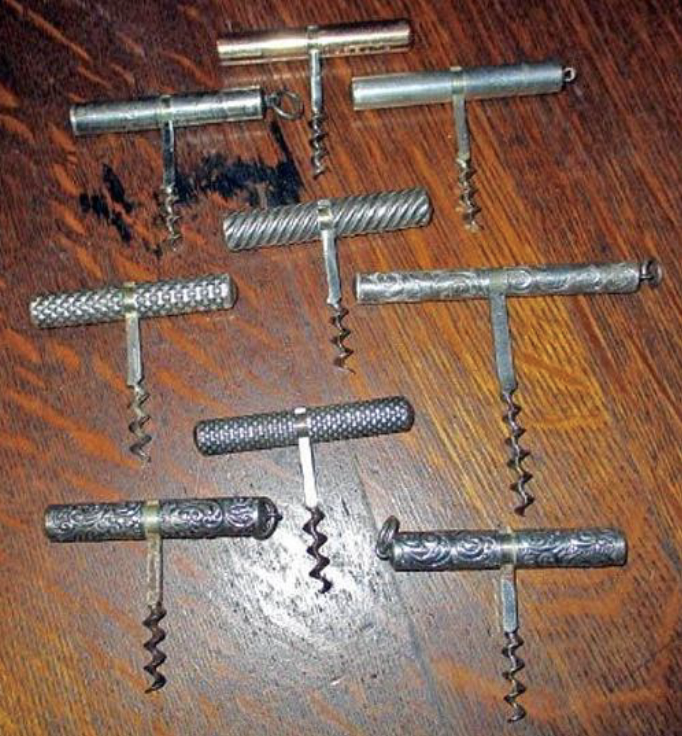
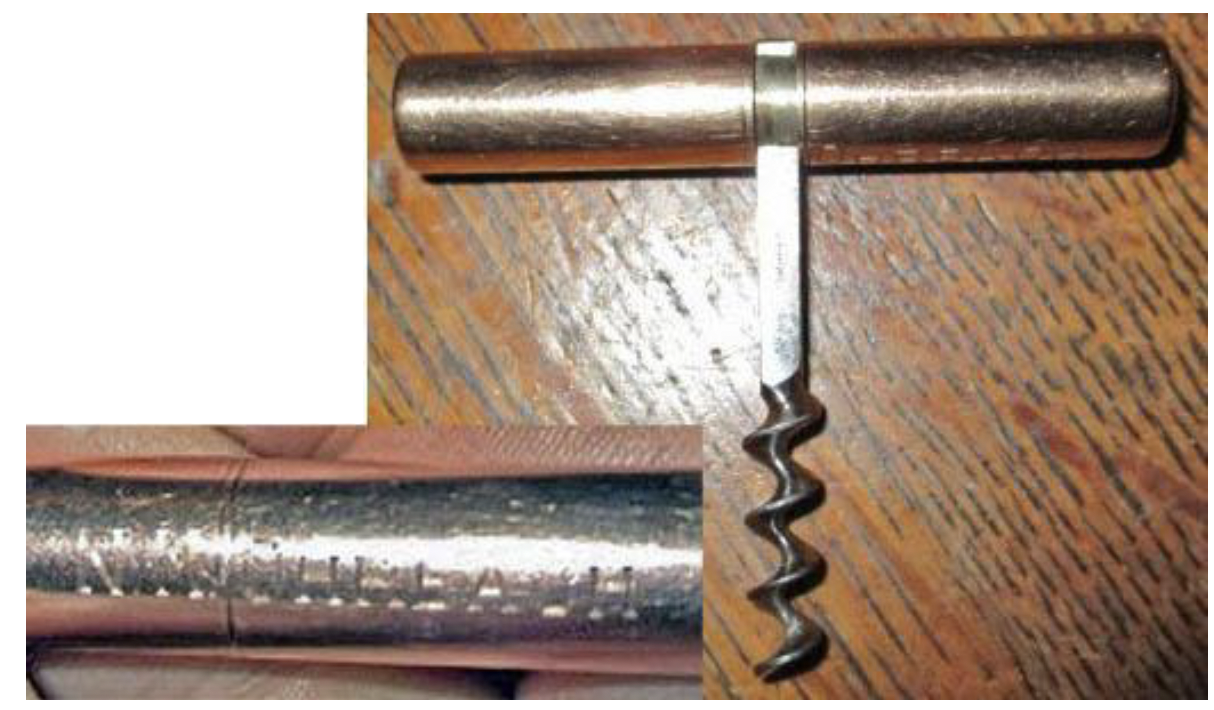
One piece marked 14 K – F (marked on inner barrel PATENTED AUG. 21, 88)
2 1/4” long. It is monogrammed N.M.OHRBACH. I found an article in the Dec. 24, 1947 New York Times: “Nathan M. Ohrbach was sworn in yesterday at City Hall as Deputy Commissioner of Commerce by Judge Albert Conway of the Court of Appeals. Mr. Ohrbach is chairman of the board of Ohrbach's, Inc., a vice president of Montefiore Hospital and chairman of the citywide campaign of the Boy Scouts of America.” He was the president of Ohrbach's Department Store. The department store opened in 1923. It expanded quickly after World War II, including opening up stores in L.A. They went out of business in 1987.
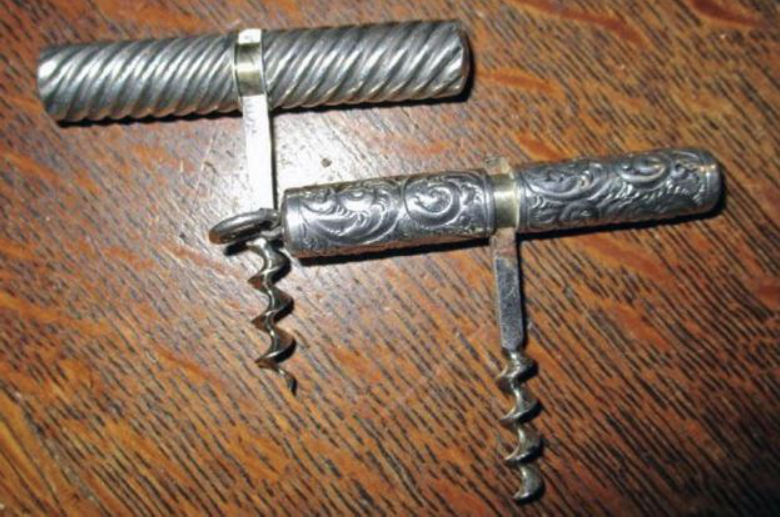
Two pieces Fairchild & Co mark (both marked on inner barrel PATENTED AUG. 21, 88) with key logo.
This looks to be an early Fairchild mark when the company was called L.W. Fairchild & Co. Both pieces are 2 1/4” long.
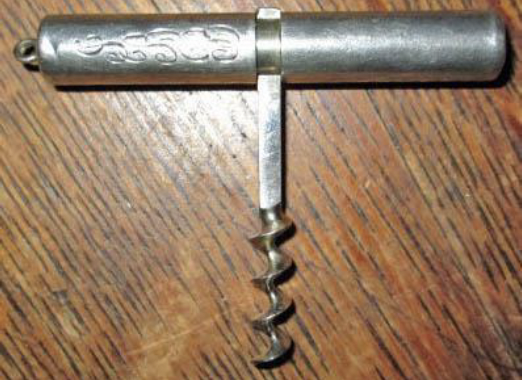
One piece Fairchild unmarked. No patent info on inner sleeve. No sterling mark, but it appears to be sterling.
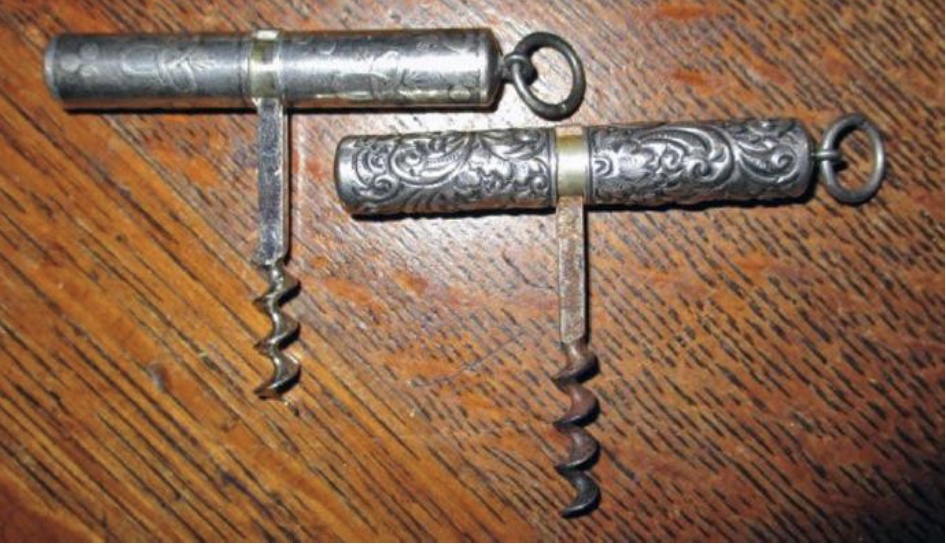
Two pieces marked STERLING – F (both marked on inner barrel PATENTED AUG. 21, 88).
These two are 2 1/4” long. I love the piece on the left. I remember when I got it. Just by chance, I checked Proxibid and the auction was ending in ten minutes. Blind luck. Both pieces have the F marked right after the Sterling on one line.
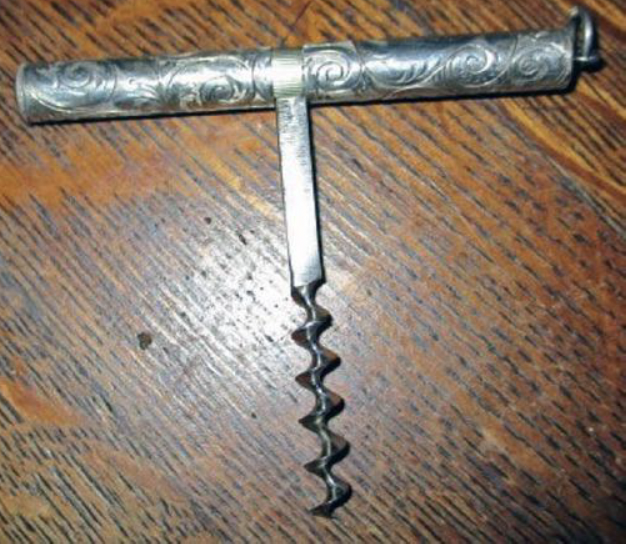
One larger piece marked F inside a shield.
This piece is 3” long. It is the same size as the Haffs, but more slender. Very similar to the Fairchild & Johnson hallmark, but with no J – not marked with patent information anywhere.
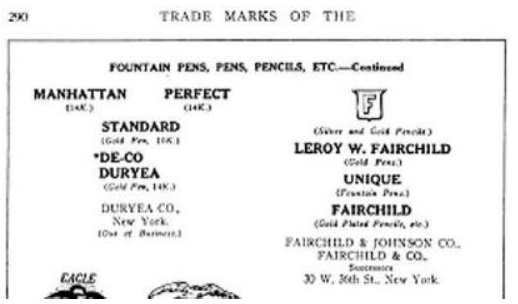
One larger piece marked F inside a shield.
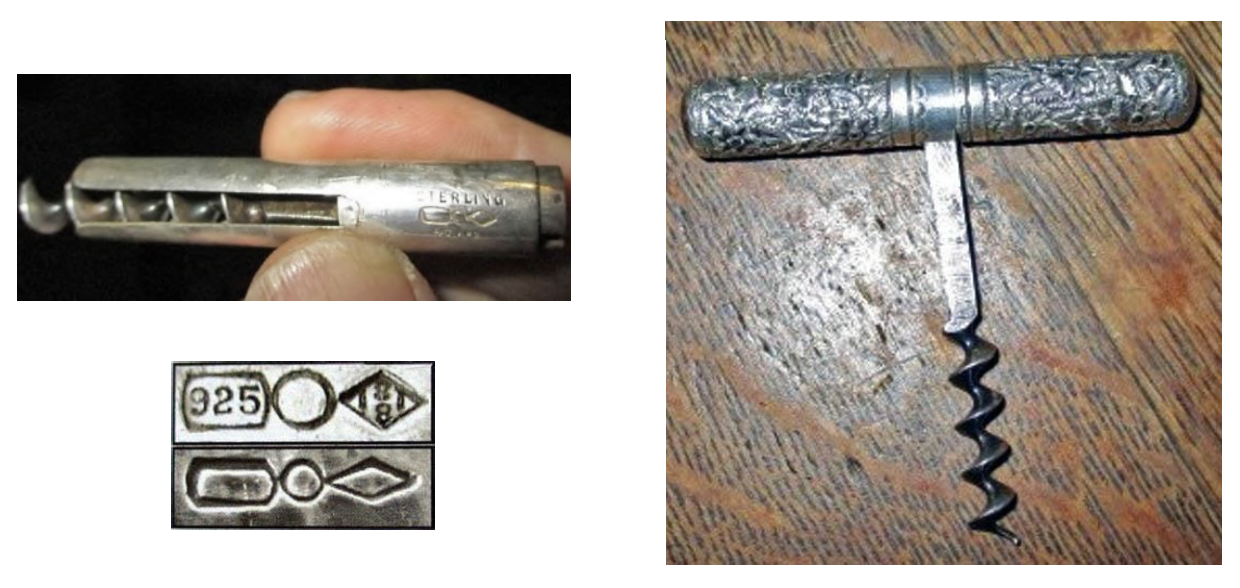
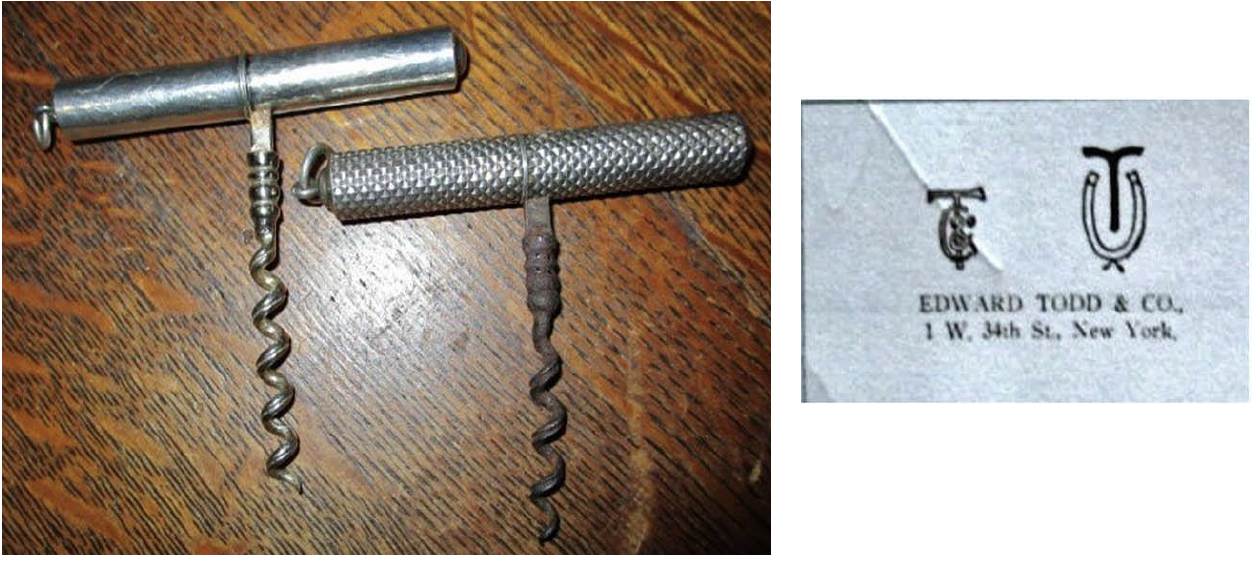
Edward Todd & Co. New York, N.Y. founded 1871, manufacturers of desk items and writing instruments, out of business 1930.
Two pieces with the Edward Todd & Co. mark. Both are 3” long.
One piece marked STERLING only - no patent info on inner sleeve. 3” long.
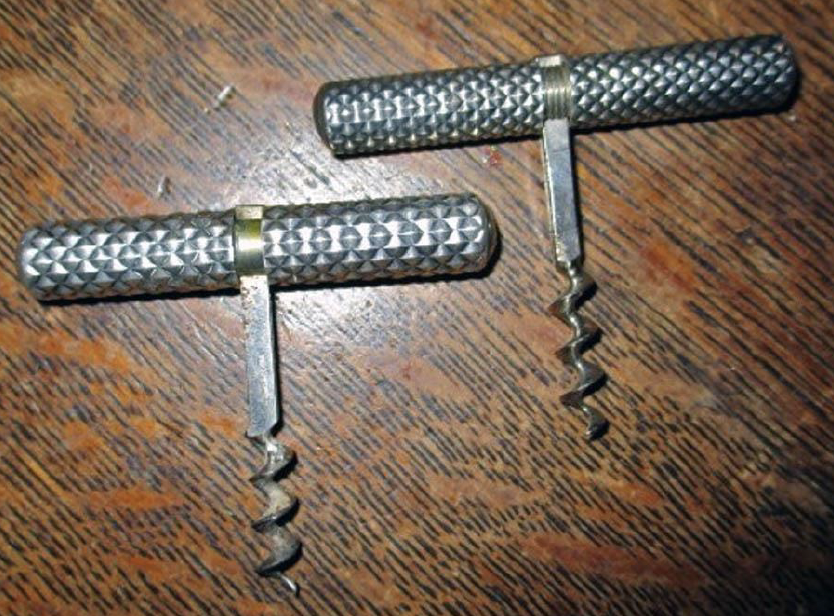
Two pieces marked – patent info on inner sleeve, one screws together instead of slides – marked with the F underneath the STERLING.
I find these two corkscrews to be truly incredible in their design. They actually have a great Art Deco feel to me.
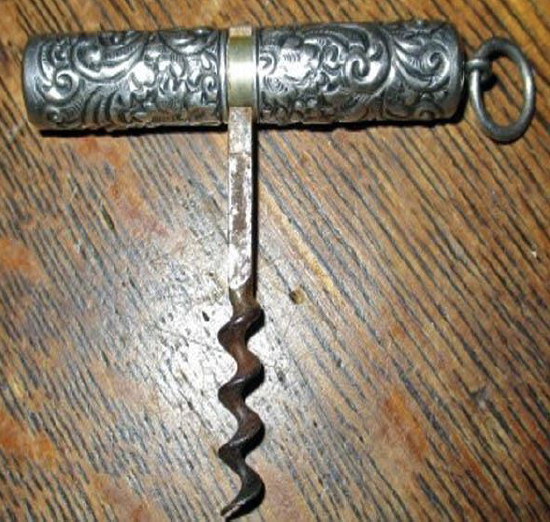
One piece marked STERLING only – no patent info on inner sleeve.
One piece marked STERLING only – no patent info on inner sleeve.
Haff Patents
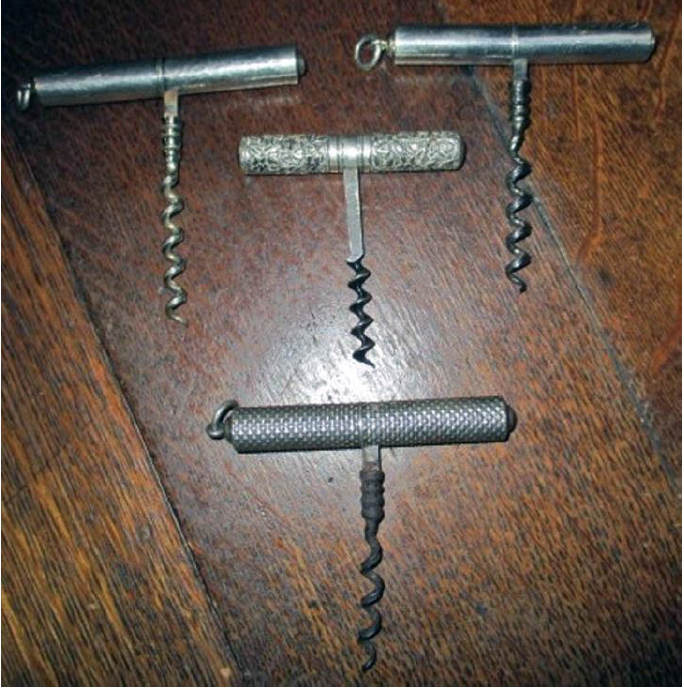
I have four Haff corkscrews. One of them is marked with a Dominick & Haff hallmark. Two have Edward Todd & Co. hallmarks. The fourth is only marked sterling. What was the relationship between Todd and Haff?
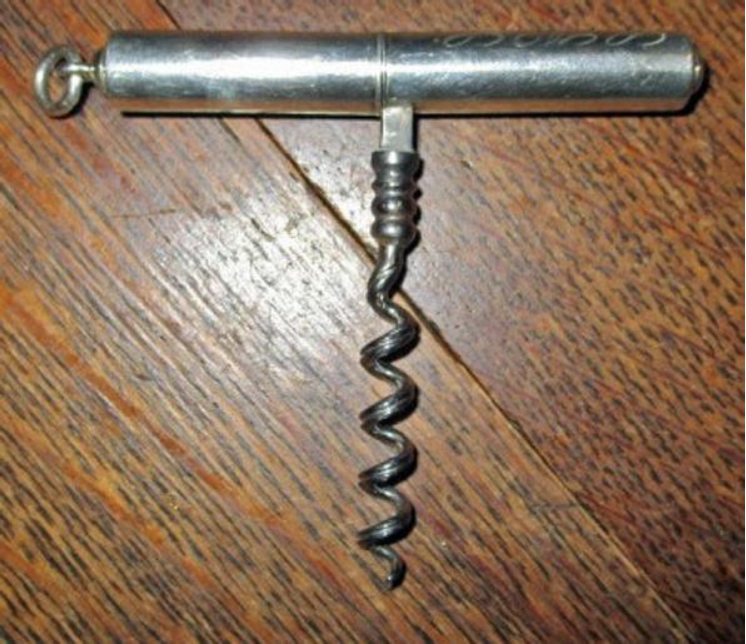
One piece with Dominick & Haff hallmark with patent info on inner sleeve – Here is the connection between Le Roy Haff and Dominick and Haff. It has Pat. Apld on it as well. I bought this piece in the CCCC Auction in Amsterdam and it was suggested that it might be German. Obviously, this is not the case. It is 2 1/4” long. I played with this piece for hours and finally got it back together correctly. Does anyone else have a Haff patent with the Dominick & Haff hallmark? I could not find one in any of the reference books.
2018
My theme for this year's Best Six is Silver Corkscrews from the GORHAM MANUFACTURING CO. of Providence, Rhode Island. Gorham was founded in 1831 by Jabez Gorham, a master craftsman, in partnership with Henry L. Webster. The firm's chief product was spoons of coin silver. They also produced a wide range of small silver items such as thimbles, jewelry, etc.
Jabez' son, John, really was responsible for the growth of the company by embracing modernization, attracting master craftsmen, and embracing Continental Designs. Throughout the late 19th and early 20th century, the company was a very important and influential player in American silver manufacturing.
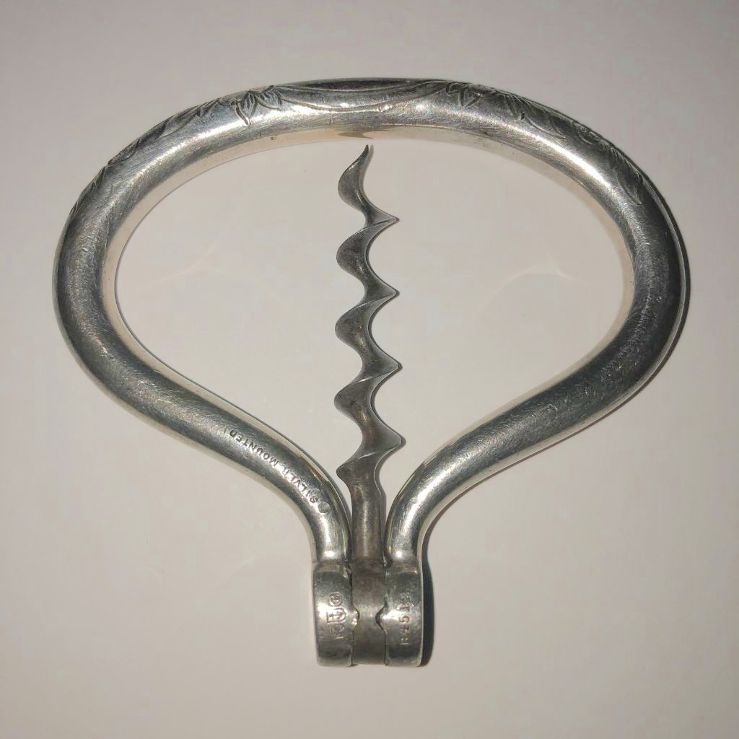
Gorham Silver Mounted Bow
With decoration marked with the traditional Gorham Anchor, also marked B4512 . Silver Mounted refers to silver being put on top of another metal. So to my understanding, this is true silver, not plate mounted on the corkscrew. The letter B indicates the year 1869 and the Gorham hallmarks are for the later part of the 19th century.
The last three corkscrews are from the same period and are all marked the same. The mark STERLING & OTHER METALS arose during the Aesthetic Movement of the late 19th century.
“During the mid-19th century, the provocative and sensuous Aesthetic movement threatened to dismantle Britain's fussy, overbearing, and conservative Victorian traditions. More than a fine art movement, Aestheticism penetrated all areas of life - from music and literature to interior design and fashion. At its heart was the desire to create "art for art's sake" and to exalt taste, the pursuit of beauty, and self-expression over moral expectations and restrictive conformity. The freedom of creative expression and sensuality that Aestheticism promoted exhilarated its adherents, but it also made them the object of ridicule among conservative Victorians. Nonetheless, by rejecting art's traditionally didactic obligations and focusing on self-expression, the Aesthetic movement helped set the stage for global, 20th-century modern art.
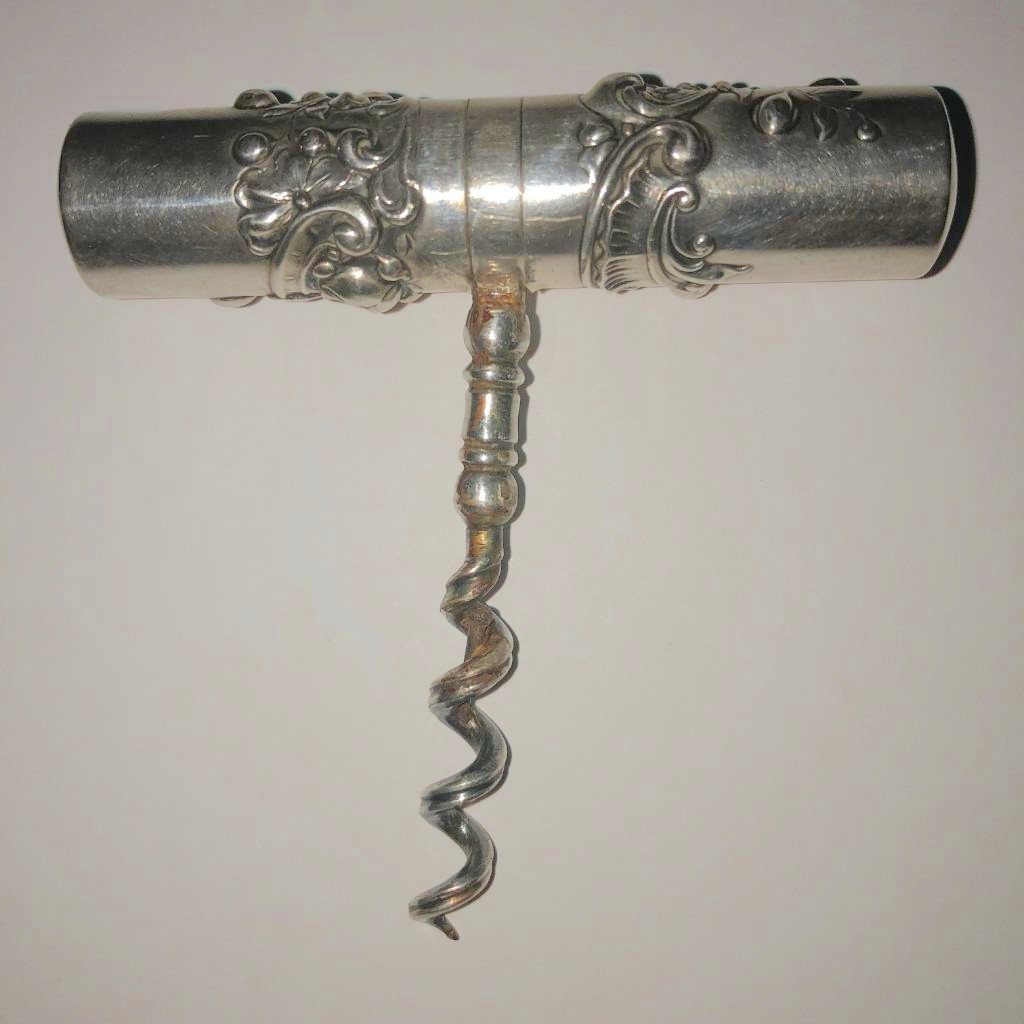
Round Shaped Gorham Roundlet
With raised decoration marked STERLING & OTHER METALS and B165 with a date mark for 1898.
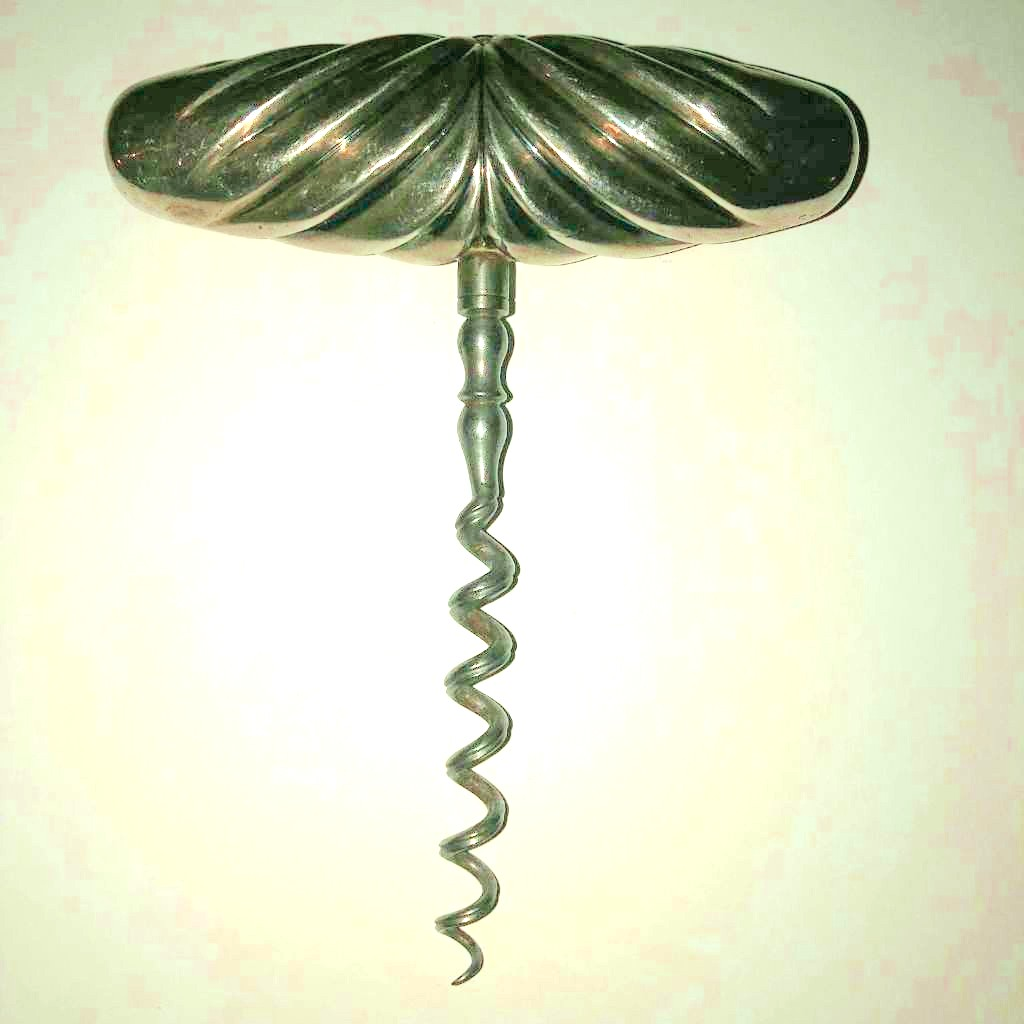
Gorham Decorative T Handle
Marked with the Gorham hallmarks for the last quarter of the 19th century and a rooster to indicate 1890 as the date of production.
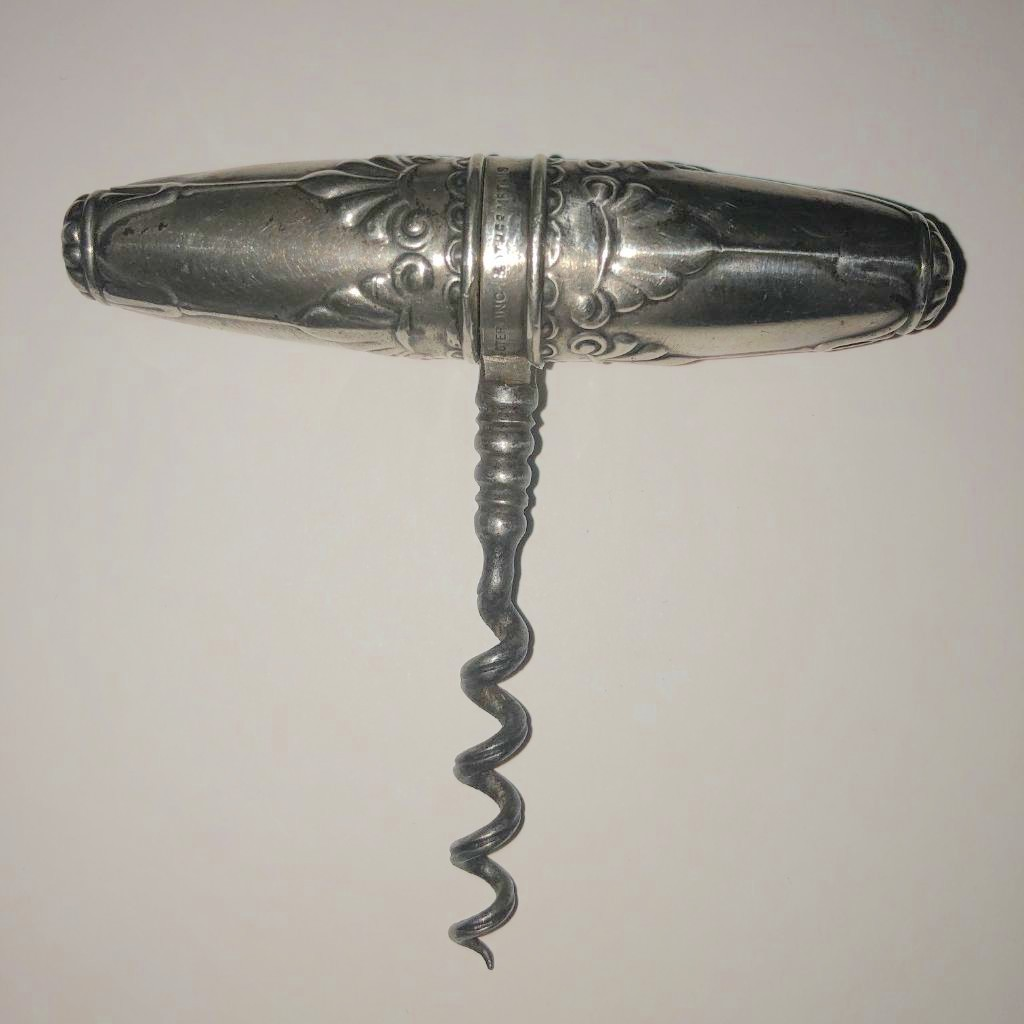
Decorative Gorham Roundlet
Marked STERLING & OTHER METALS with the hallmarks for the last part of the 19th century and a date mark of 1896.
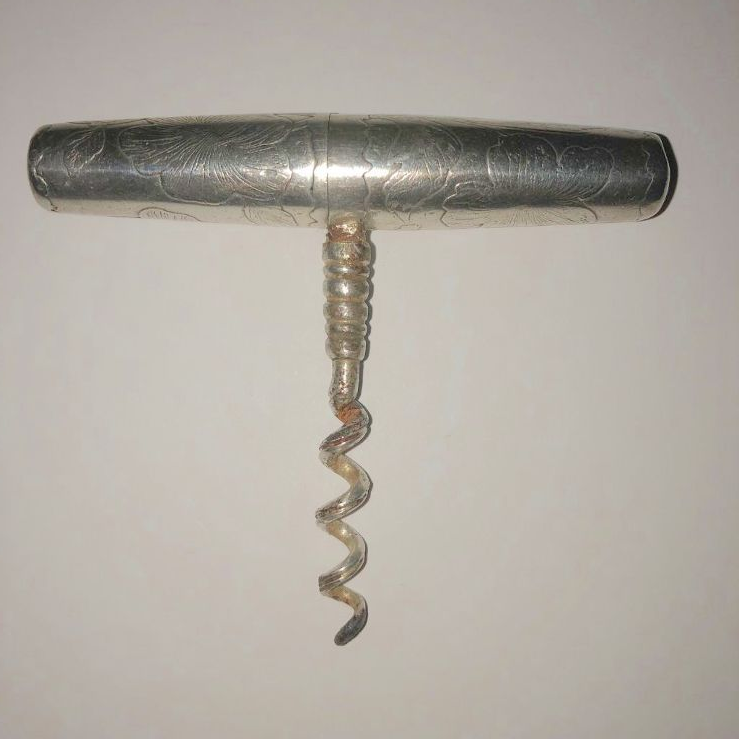
Gorham Decorative Sterling Roundlet
With hallmarks for the last quarter of the 19th century, marked STERLING 5
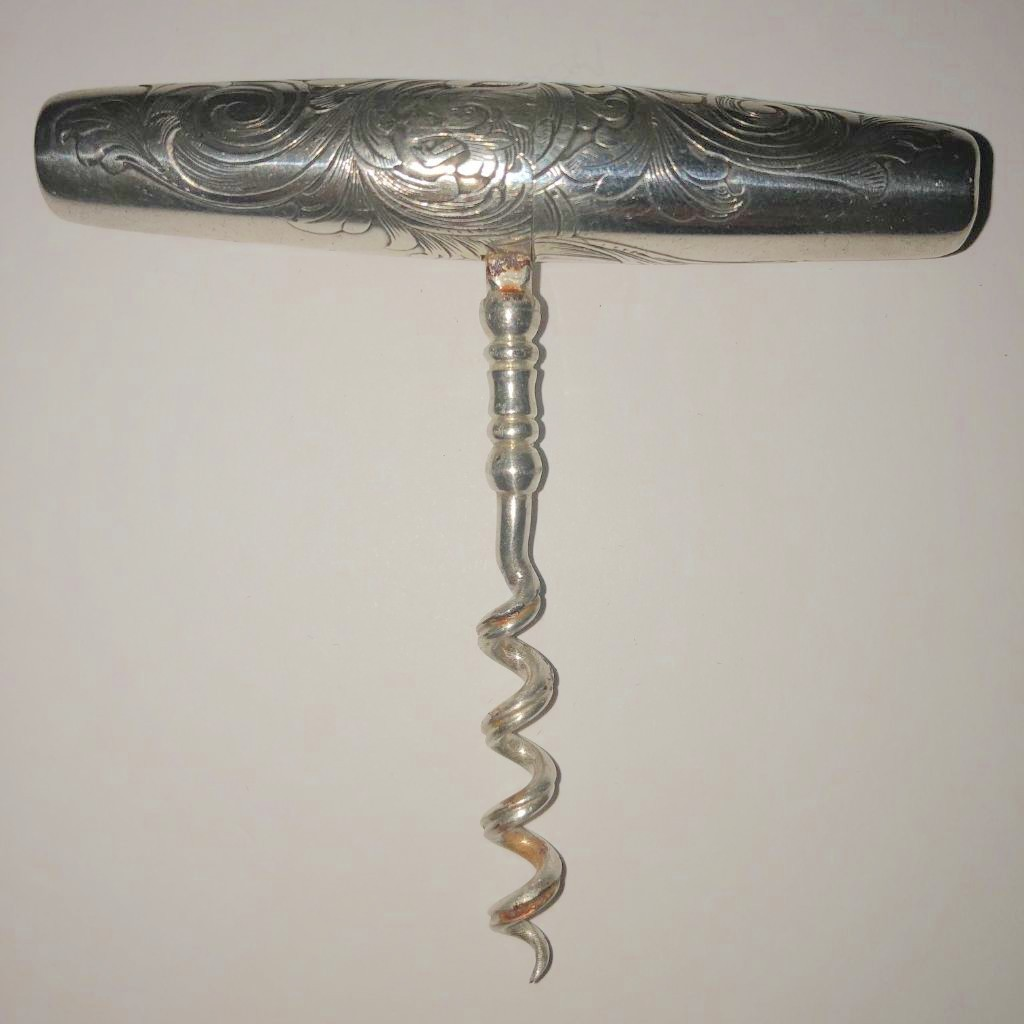
Decorative Gorham Roundlet
With very difficult to read markings I can make out the STERLING & OTHER METALS, but the rest is indistinguishable. Certainly part of the Aesthetic Movement so I would date as late 19th century.